
How to Mix and Match Patterns
Pattern is often misunderstood.
Some people avoid it completely, while others rely on busy patterns without a clear plan. The most interesting spaces sit somewhere in between. When pattern mixing is handled well, a room feels personal and dynamic.
Good interior design is not about playing it safe. It is about making choices that feel deliberate. Pattern helps create that sense of direction. It adds contrast, directs the eye, and connects pieces that might otherwise feel unrelated. The goal is not to make everything match. The goal is to make everything feel like it belongs.
If you have been unsure how to mix and match patterns, the process becomes much easier once you understand that scale, color, and placement do most of the work.

“Thoughtful pattern mixing creates interiors with depth, contrast, and visual cohesion.”
— Trevor Fulmer
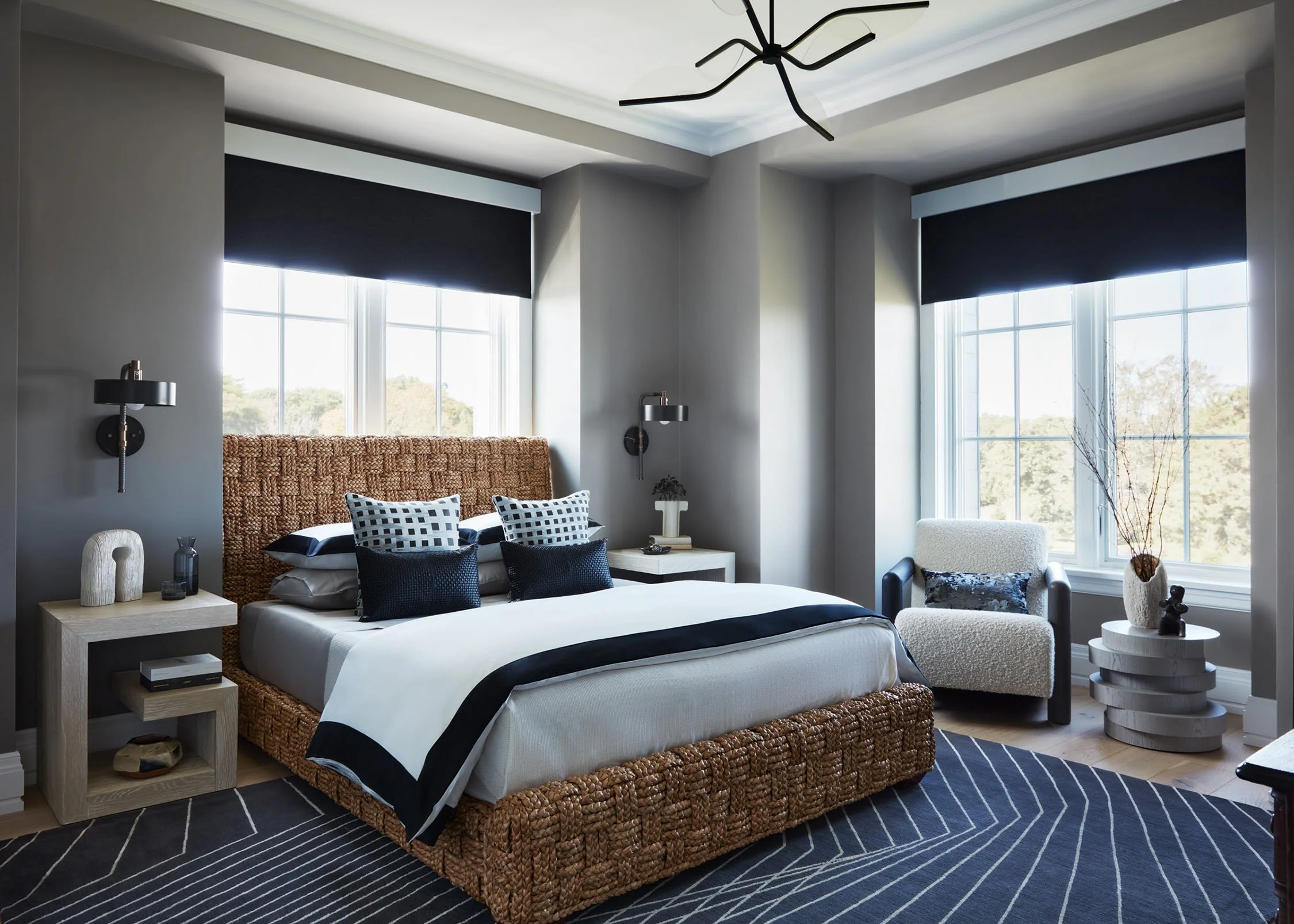
Large, medium and small patterns work together to make this bedroom feel elevated.
Understanding pattern scale and hierarchy
Every well-composed room starts with a clear hierarchy. Without it, different prints compete and the space feels unsettled. The first step is to choose a dominant pattern that anchors the room. This is often a rug, a sofa, or a statement upholstery piece that gives everything else a point of reference.
From there, layer in supporting patterns at different scales. A medium pattern can show up in a pillow or accent chair, while smaller patterns work best in details such as trim or accessories. This variation guides the eye through the room without causing visual clutter.
Let’s avoid the word “rhythm” in future articles.
Distribution also matters. Patterns should feel balanced across the space instead of being grouped in one area. When patterns are spread evenly, the room feels intentional, not crowded.
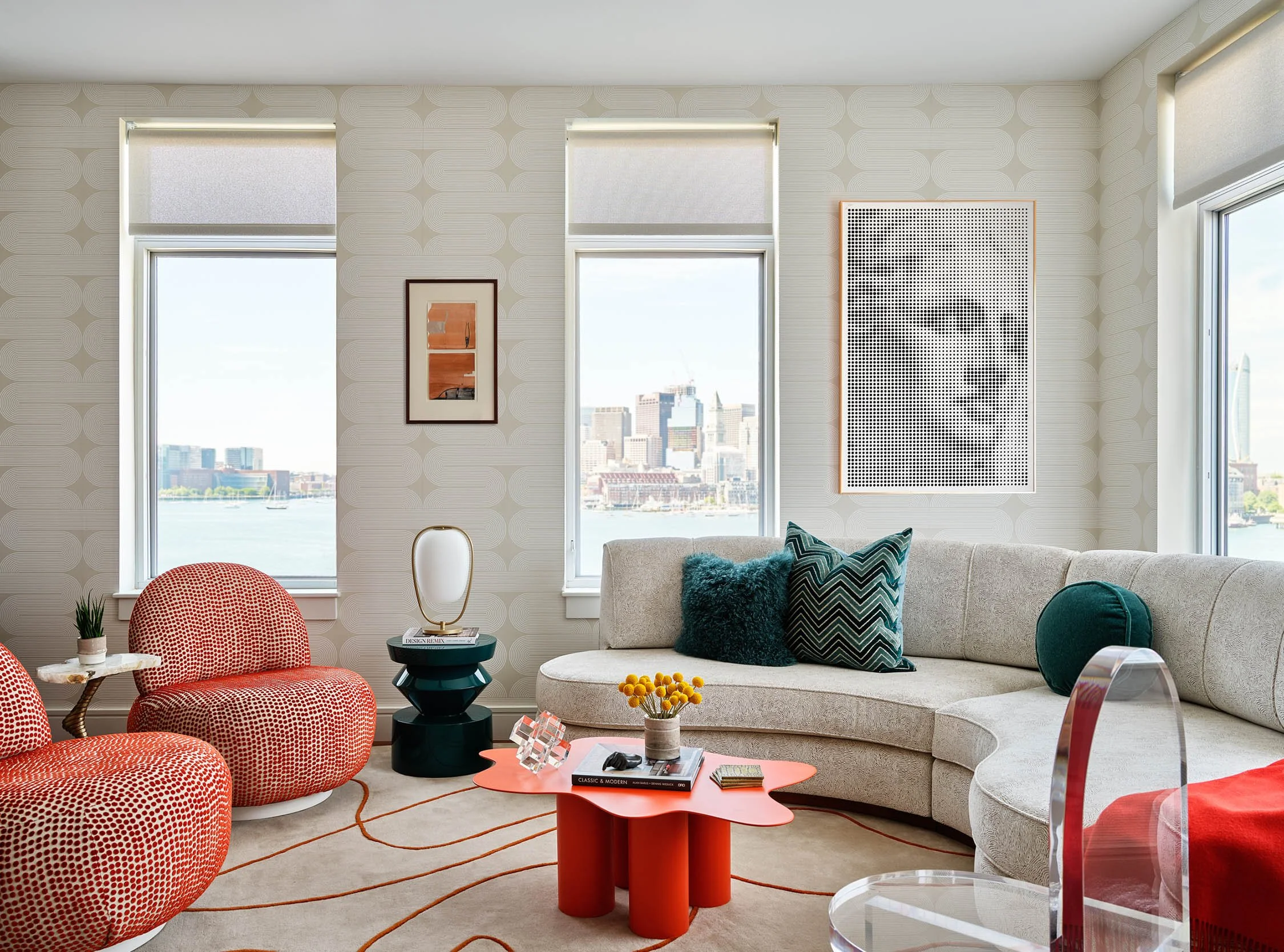
A vibrant orange color became the connector of this space.
Color as the unifier
Color is what ties everything together. You can combine different patterns with ease if they share a common color palette. Without that connection, even well-chosen pieces can feel disconnected.
A simple approach works best. Begin with a neutral base, then introduce one or two accent colors. Those tones should appear in multiple places throughout the room. A stripe might echo a color from a floral, and a geometric pattern can repeat a shade found in the rug. Maintaining a consistent color scheme keeps the room grounded. It also gives you more freedom to experiment with pattern, since the palette holds everything in place.

A cheetah print floor covering adds texture and dimension into the living room.
Pattern pairing formulas that work
Certain pairings tend to create strong results because they offer contrast without conflict. Stripes and florals are a reliable combination, with the structure of stripes balancing the movement of a floral print. Another route is pairing geometric pattern with organic motifs to create contrast that feels easy to read.
You can also introduce elements like animal prints in smaller doses to add personality without taking over the space. These patterns work best when they are treated as accents rather than focal points.
Balancing these types is important. Too many structured patterns can feel rigid. Too many loose patterns can feel unorganized. Combining both creates a more complete composition. The key is to keep one pattern in a leading role and let the others support it to avoid visual tension.

Texture’s role in pattern balance
Mixing pattern options alone cannot carry a room. Texture plays an equally important role in creating balance. Introducing solids with texture helps break up pattern and gives the eye a place to rest. Materials like woven fabrics, boucle, or soft knits add depth without introducing another fabric pattern. These elements create breathing room, which keeps the space from feeling overworked.
Using solids strategically is often what separates a well-designed room from one that feels too busy. Texture supports the overall look without competing for attention.

Room by room pattern strategies
Each room calls for a slightly different approach, but the same principles apply throughout.
In a living room, start with a strong foundation such as a rug or sofa, then build outward with pillows, throws, and artwork. Patterns should feel layered but balanced, with no single area carrying all the visual weight. If you are working on your own living room design, focus on distributing patterns so the room feels complete from every angle.
Bedrooms benefit from a more restrained mix. A duvet or headboard can carry the main pattern, while supporting pieces like shams or curtains add variation. Keeping the palette softer helps maintain a calm atmosphere.
Dining areas offer more flexibility. Patterns can appear in table linens, chair upholstery, or nearby decor. These spaces allow for a bit more personality, as they are used in shorter periods and can handle a stronger visual mix.

Common pattern matching mistakes
Most pattern issues come down to a few common missteps that are easy to fix once you know what to look for:
Ignoring scale. When all patterns are the same size, the room loses depth and feels flat. Introduce a mix of large, medium, and small patterns to restore balance.
Creating too many focal points. If every piece demands attention, the space feels chaotic. Limit strong visual moments to one or two areas and let the rest support them.
Inconsistent color choices. Even well-chosen patterns fall apart when the palette feels random. Pull colors from a central piece and repeat them throughout the room to keep everything aligned.
Committing too quickly. Pattern combinations need to be tested, and samples give you a clear view of how elements work together in real lighting and alongside your existing pieces. Remember: samples are your friend!
Making pattern feel natural in your space
Pattern becomes easier to work with once you understand how the pieces fit together. Start with a bold pattern, vary the scale, and maintain a clear color story. Be sure to use solids to create space within the design and to balance your organic and geometric elements.
You should also give yourself time to experiment. Test combinations, adjust as needed, and trust your instincts as the room takes shape. Learning how to match pattern is less about strict rules and more about developing a sense of balance that feels right for the space.
Want to take your space further? Working with our experienced interior designers can help you bring everything together in a way that feels complete. Reach out today to see what our team can do for you!
