
Living Room Design Services
The living room is where everyday life happens. It’s where people gather, unwind, read, talk, host friends, and spend quiet moments at home. A well-designed living room supports all of that without feeling overworked or overly styled.
At Trevor Fulmer Design, we see the living room as both a lived-in space and an architectural one. We start by understanding how the room needs to function, how it connects to the rest of the home, and how it should feel at different times of day.
Our work is grounded in proportion, restraint, and careful decision-making. Instead of following trends or focusing on aesthetics alone, we design living rooms that feel comfortable, considered, and easy to live in. Every choice is made with daily habits in mind, from seating depth to lighting placement. This approach allows us to deliver living room design services that feel natural from the first day and continue to make sense years later.
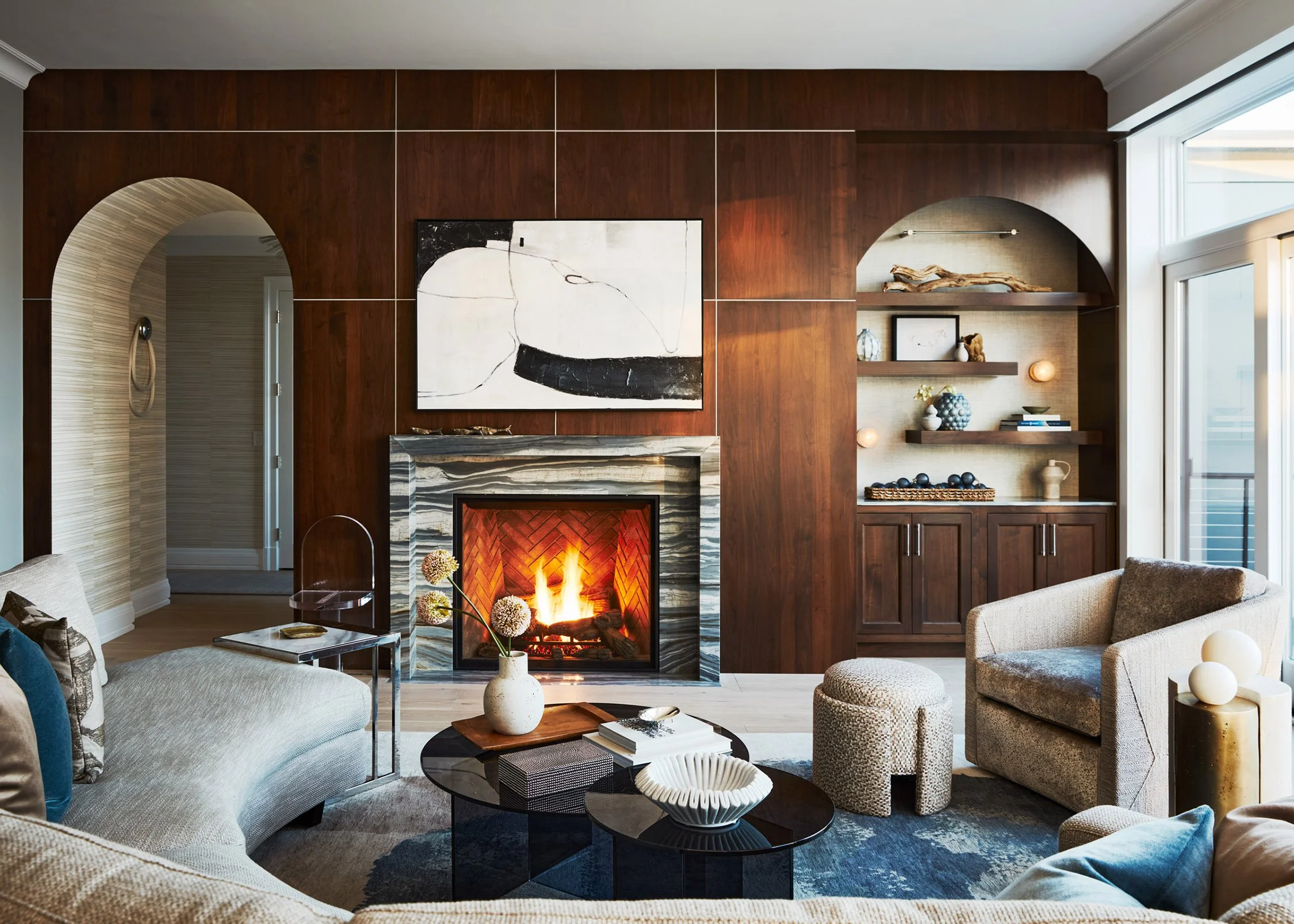
Project: Nautical Noir
Start with how the living room is used
Before furniture is selected or finishes are discussed, we focus on how the living room will actually be used.
Some living rooms are meant for hosting and conversation. Others are quieter spaces for reading or unwinding. Many need to support family time, relaxing evenings, and entertaining guests, all within the same room.
Understanding these priorities shapes every decision that follows. A home that hosts often may need flexible seating and open circulation. A household that values calm evenings may benefit from a more contained layout with fewer visual distractions. Starting here helps avoid design choices that look appealing but fall short in daily use.
We ask practical questions early. How many people use the room at once? How often guests are present? How does the space connect to nearby rooms? The answers to these questions guide the design from the beginning and lead to living rooms that feel so much more than just decorative.
Choose the right floor plan
A strong floor plan sets the foundation for a successful living room.
Before finalizing a layout, we closely analyze the room’s proportions, ceiling height, window placement, fireplaces, and how the living space relates to adjacent rooms. These details determine how furniture should be arranged as well as how the room should be experienced.
When possible, we collaborate with builders and architects to ensure the interior architecture supports the intended furniture layout. By reviewing flow, window and door placements, cased openings, built-ins, and overall spatial planning in advance, we can help guide decisions that allow the furniture floor plan to feel intentional rather than forced.
Rather than relying on default layouts, we respond to what the architecture supports. Some rooms benefit from centered seating. Others work better with layouts that respond to views or natural movement through the space. The goal is to let the room function comfortably without blocking pathways or sightlines.
Floor planning also helps avoid common issues like crowded seating, oversized furniture, or empty areas that feel disconnected. When the layout is right, the room feels easier to use and more inviting.

Prioritize Circulation and Comfort
Circulation plays a key part in how a living room feels, even though it often goes unnoticed.
Clear pathways allow people to move through the space without stepping around furniture or interrupting conversation. Proper spacing between seating, tables, and walkways makes the room feel balanced.
We pay attention to how people enter, move through, and settle into the space. Seating should never block natural paths. Coffee tables should be easy to reach without crowding. Chairs should allow people to sit and stand comfortably.
When circulation is handled well, the room feels intentional . This layer of planning is what separates a room that looks finished from one that truly works.
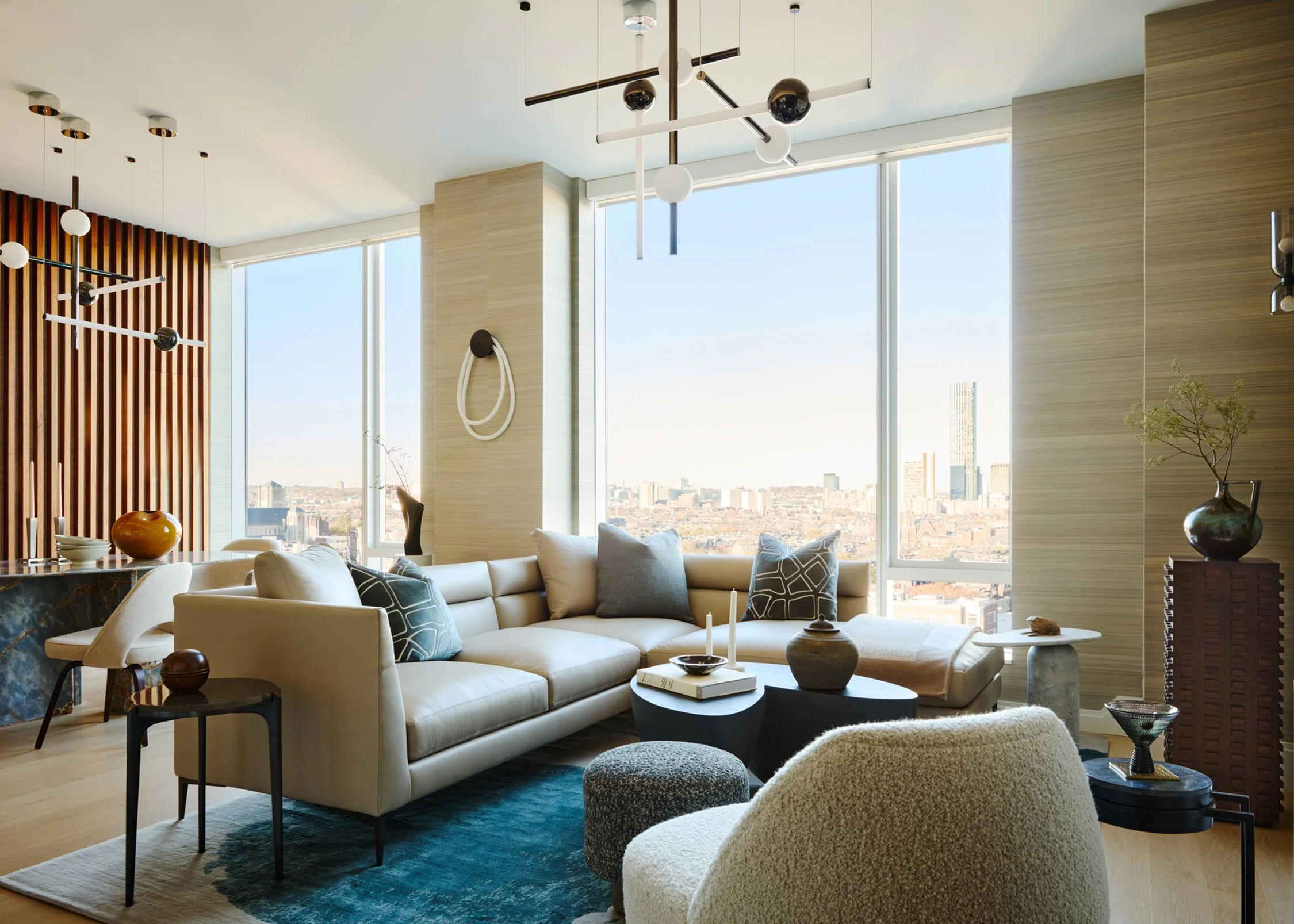
Project: Skyline Sophistication
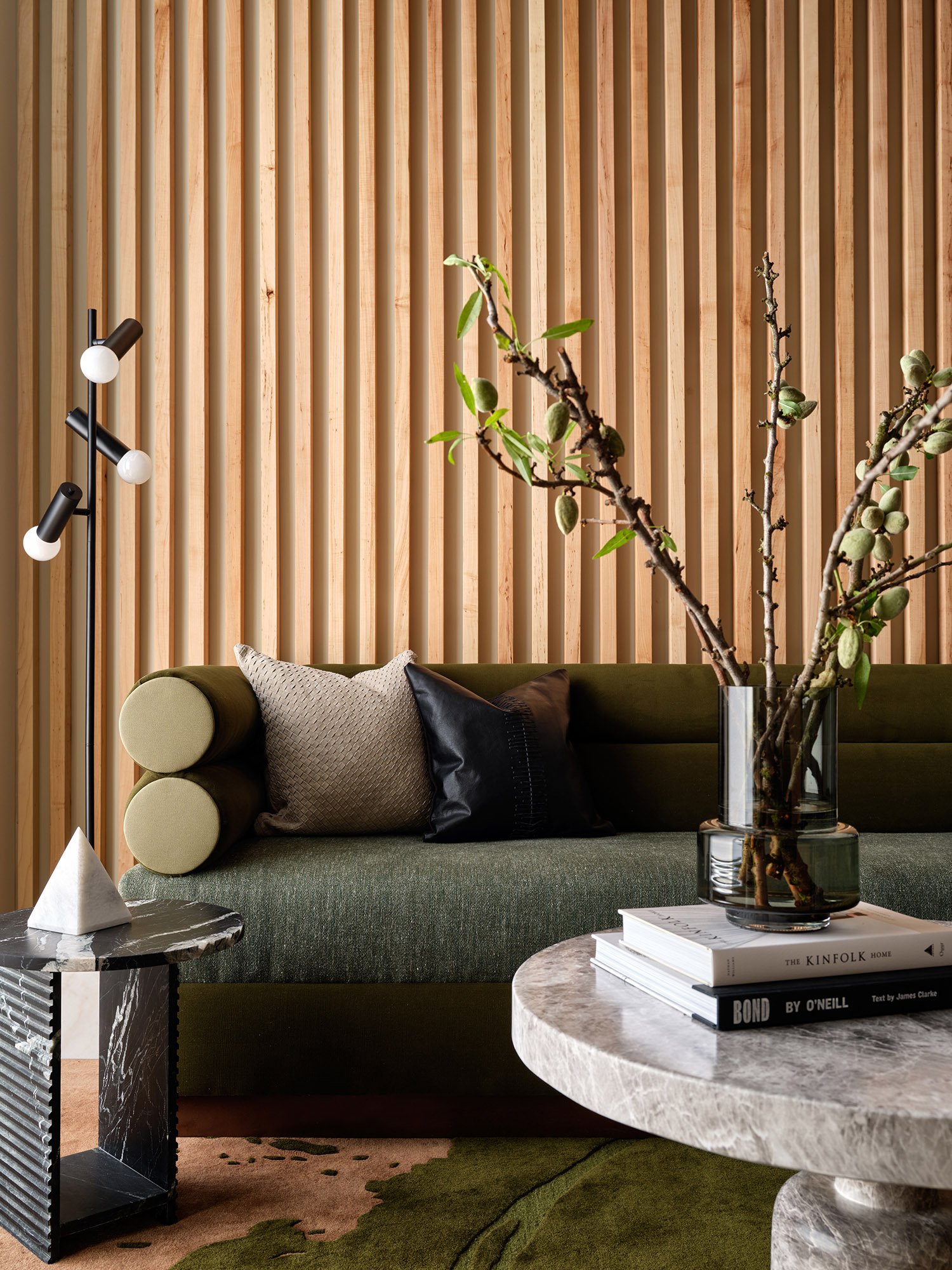
Project: Postmodern Naturals
Select the right sofa for how you live
The sofa anchors the living room and plays a major role in how the space functions. Scale, depth, and durability all matter. A sofa that looks good but feels uncomfortable won’t support everyday use.
We help clients choose sofas based on how they sit, lounge, and gather. A deeper seat may work well for relaxed households, while a more structured profile supports conversation. Fabric choice matters too. Homes with children or pets may need upholstery that can handle frequent use.
Placement is just as important as selection. The sofa should support the layout and encourage connection without overpowering the room. When chosen with care, it becomes the foundation of the space.

Project: Seaside Sanctuary
Balance seating variety
A well-designed living room includes a mix of seating that supports flexibility as well as conversation. While the sofa anchors the space, additional seating adds balance and allows the room to adapt to different needs.
Accent and lounge chairs create smaller conversation areas. Ottomans can serve as footrests, extra seating, or soft surfaces for trays. Benches and tête-à-têtes provide structure and conversation zones without blocking views or feeling bulky. Combining these elements keeps the room from feeling static. It also allows the living room to change throughout the day and feel welcoming in different situations.
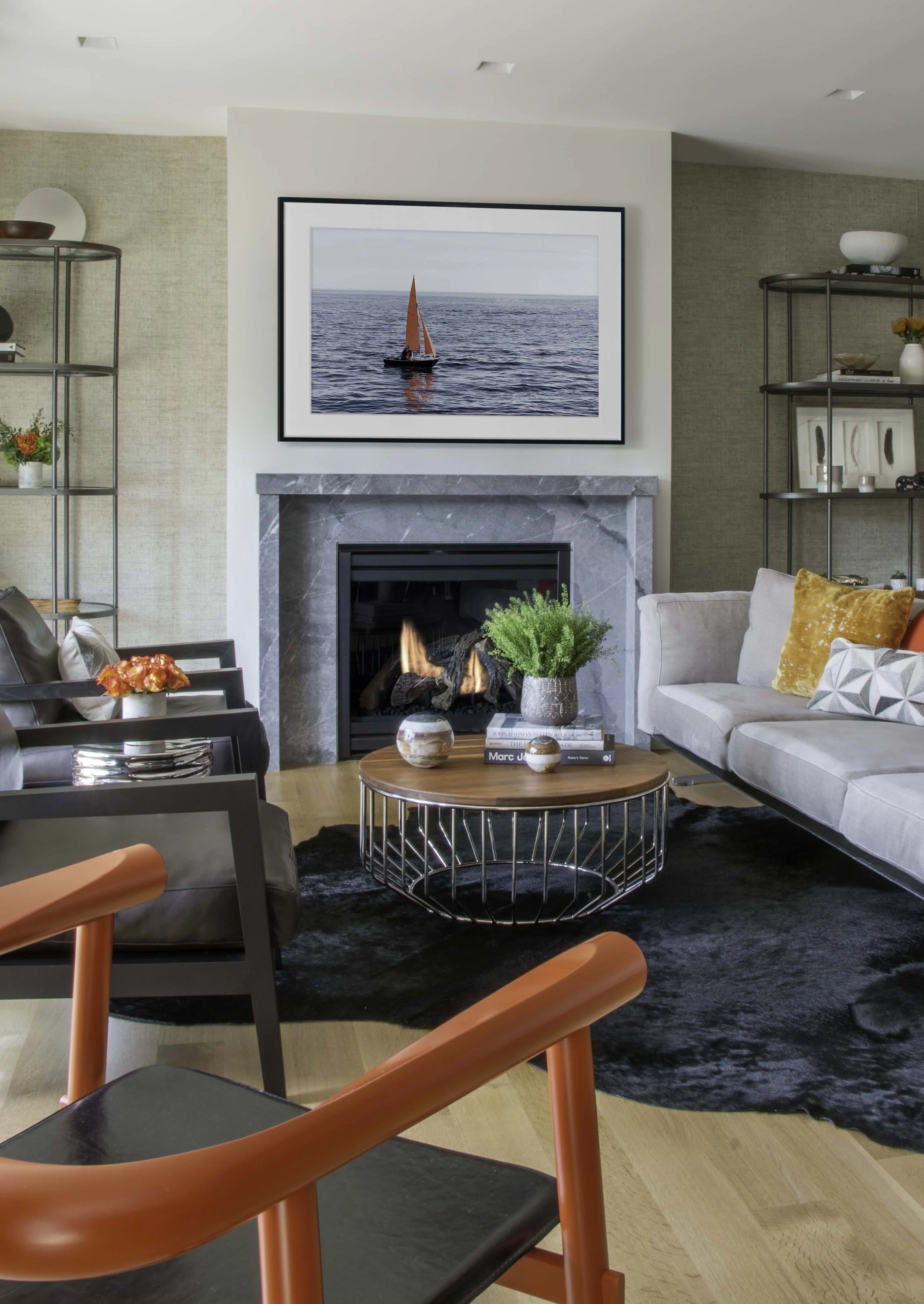
Project: Contemporary Coastal

Project: Skyline Sophistication
Define the space with area rugs
Area rugs play an important role in living room design. They anchor furniture, define seating areas, and add warmth underfoot. The right rug can instantly make the room feel more grounded.
We focus on proper scale when selecting rugs. A rug that’s too small can make furniture feel disconnected. Ideally, the front legs of seating sit comfortably on the rug to tie the arrangement together.
Material and texture matter as well. Rugs soften hard surfaces while also adding visual interest. When chosen thoughtfully, they serve both practical and visual purposes.
Explore our Foundations rug collection.
Plan lighting in layers
Lighting shapes how a living room feels throughout the day. A layered lighting plan supports different activities without relying on a single source.
Ambient lighting provides overall brightness. Task lighting supports reading or focused activities. Accent lighting highlights artwork, shelving, or architectural details. Together, these layers create flexibility and depth.
We also consider placement carefully. Ceiling height, furniture layout, and surface finishes all affect how light is experienced. A calculated lighting plan allows the room to shift easily from day to evening.
See our project Home Health Haven for creative and award-winning lighting solutions.
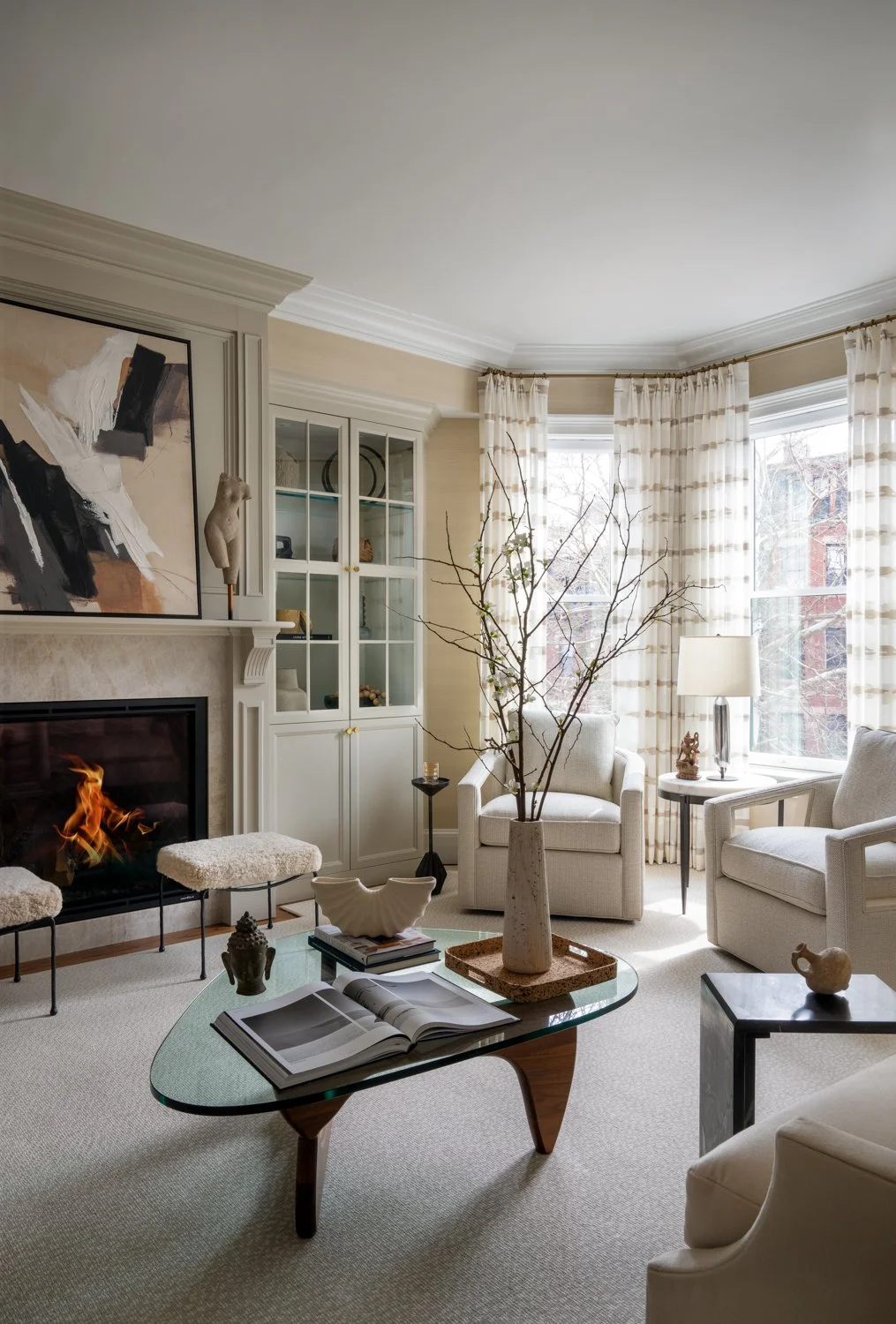
Project: Neutral Nuances
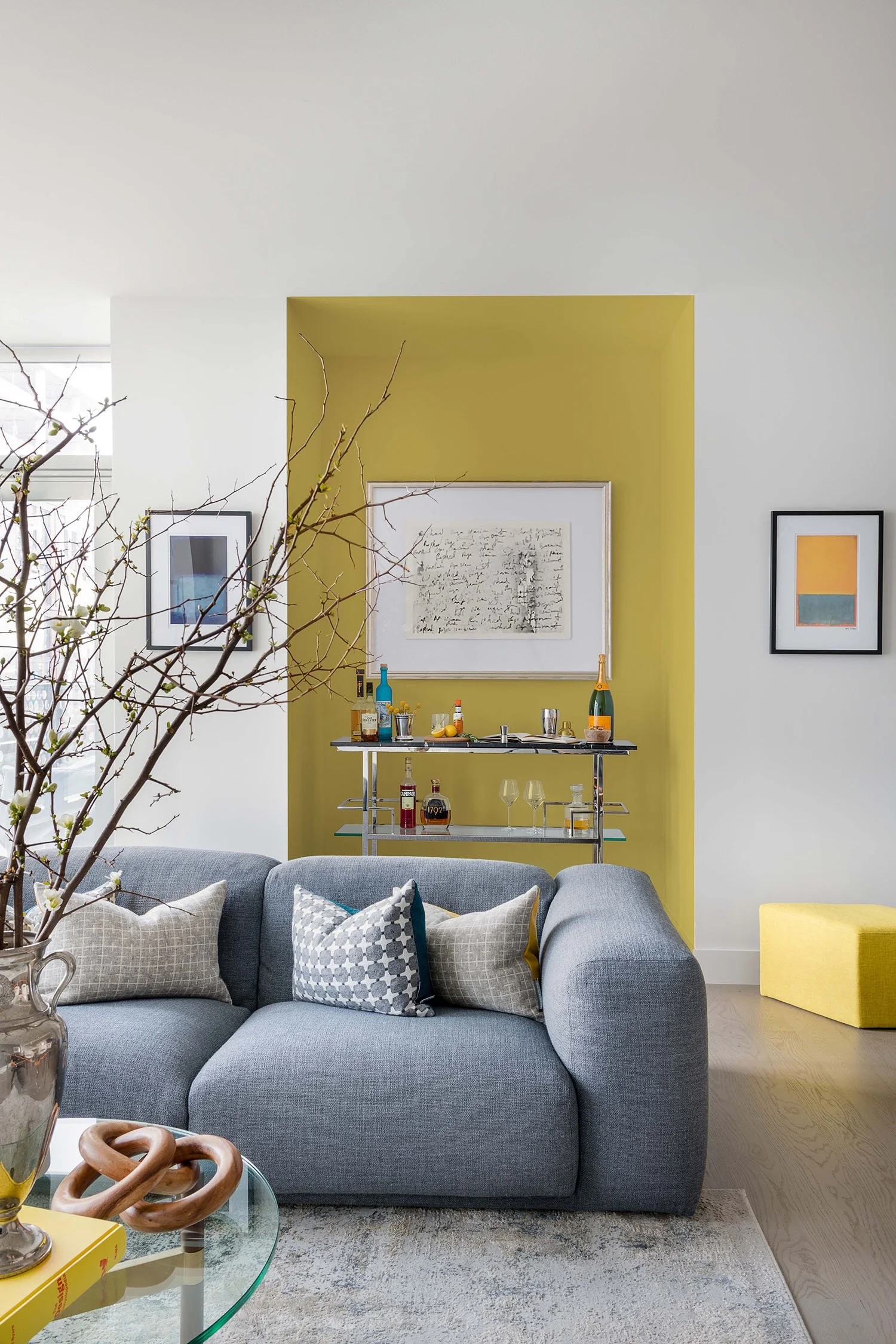
Project: Modern Elegance
Renovation or remodel: respect existing architecture
When a living room renovation is part of a larger remodel, respecting the home’s existing architecture is essential. Original moldings, ceiling details, windows, and fireplaces often guide strong design decisions.
Rather than removing these elements, we build on them. New additions should feel appropriate to the home’s character and scale. This approach results in spaces that feel settled. Even in updated interiors, honoring the home’s structure helps the living room feel like it belongs.
Use color to support the space
Color has a strong influence on how a living room feels. That's why we approach color selection with intention, focusing on palettes that support both the architecture and how the room is used.
Lighter tones can make smaller spaces feel more open, while deeper richer shades add comfort and drama in larger rooms. We also consider natural light and adjacent spaces to maintain visual flow. Our goal is to guide clients toward colors that feel comfortable over time.
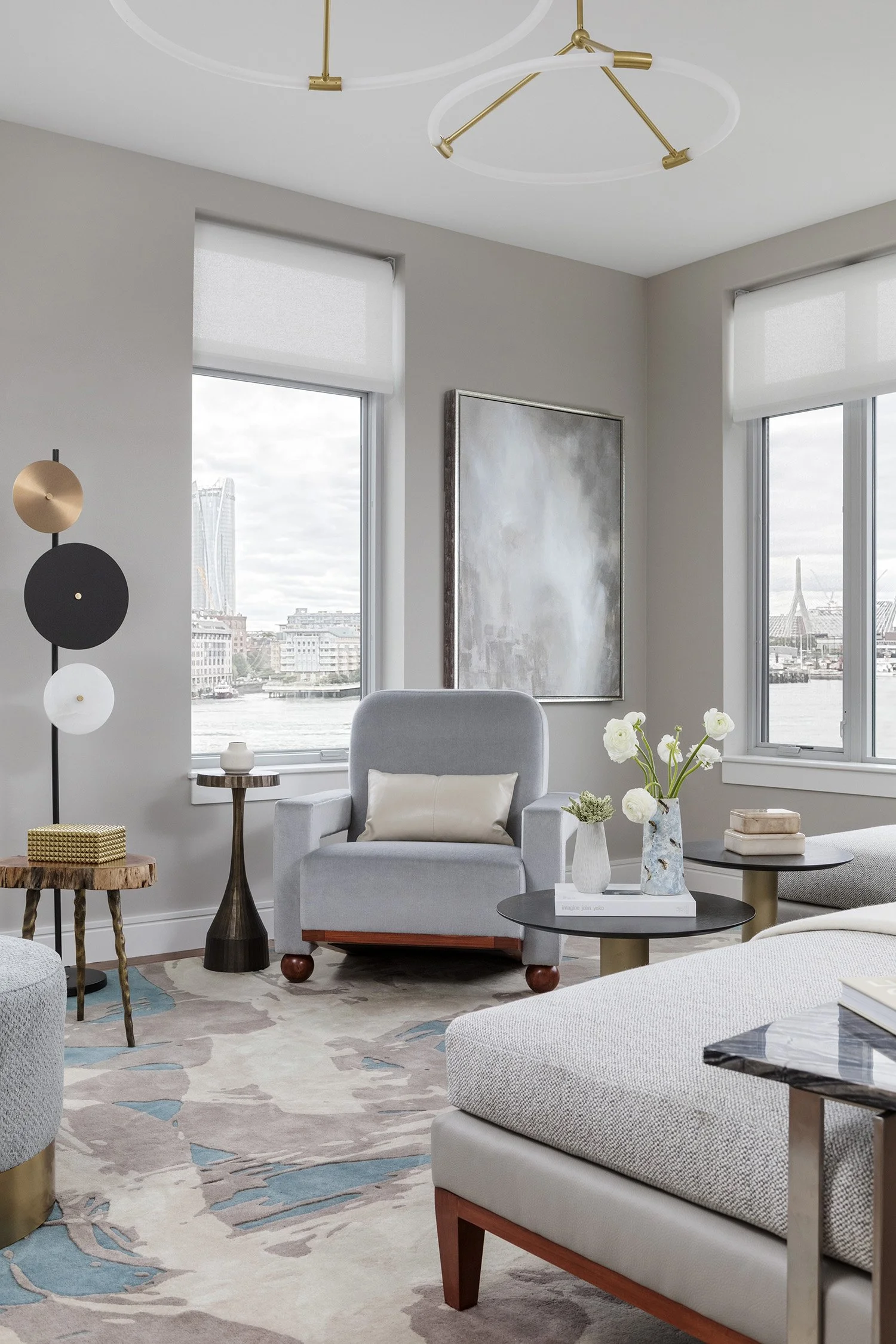
Project: Elevated Eastie
Create continuity through materials
Material selection helps connect the living room to the rest of the home. Repeating finishes, textures, and tones creates visual consistency, especially in open layouts where multiple spaces are seen at once. When materials relate to one another, the living room feels like part of a larger whole and not a standalone space.
We look for opportunities to echo materials used elsewhere, such as wood species, stone finishes, or metal details. A wood tone introduced in flooring may reappear in shelving or furniture selection. A metal finish used in the kitchen can show up subtly in lighting or hardware. This repetition helps the living room feel integrated without feeling repetitive.
Consistency doesn’t mean everything looks the same. Subtle variation within a controlled color palette adds interest and keeps the space from feeling flat. Changes in texture, finish, or scale allow materials to relate while still bringing visual movement to the room.
Wall treatments also play a critical role in establishing continuity. Wallpaper, wallcoverings, wood paneling, plaster finishes, and other interior wall applications add
depth and architectural character. Thoughtfully selected wall finishes help anchor the
space and elevate it beyond furniture alone, contributing to a layered, cohesive interior.

Project: Nautical Noir
Importance of shelving and millwork
Shelving and millwork add storage, display space, and architectural depth to living rooms. Built-ins can frame fireplaces, house media, or provide room for books and personal objects, all while reinforcing the structure of the space.
When designed well, millwork feels like part of the home. Proportion, spacing, and material choice all play a role. The goal is for shelving to support the room without competing with it.
Custom shelving also gives the living room flexibility over time. Displays can evolve as collections change, allowing the space to feel personal without becoming visually heavy.
Consider interior architecture
Interior architectural elements give living rooms presence beyond decoration. Wall treatments, ceiling details, and built-ins influence how the space is perceived as soon as you enter.
These elements can help define areas, add structure, or bring balance to larger rooms that might otherwise feel undefined. When handled with restraint, they create a sense of intention without drawing unnecessary attention.
We see interior architecture as a way to reinforce the foundation of the room. These decisions support the design long after furniture or accessories change.
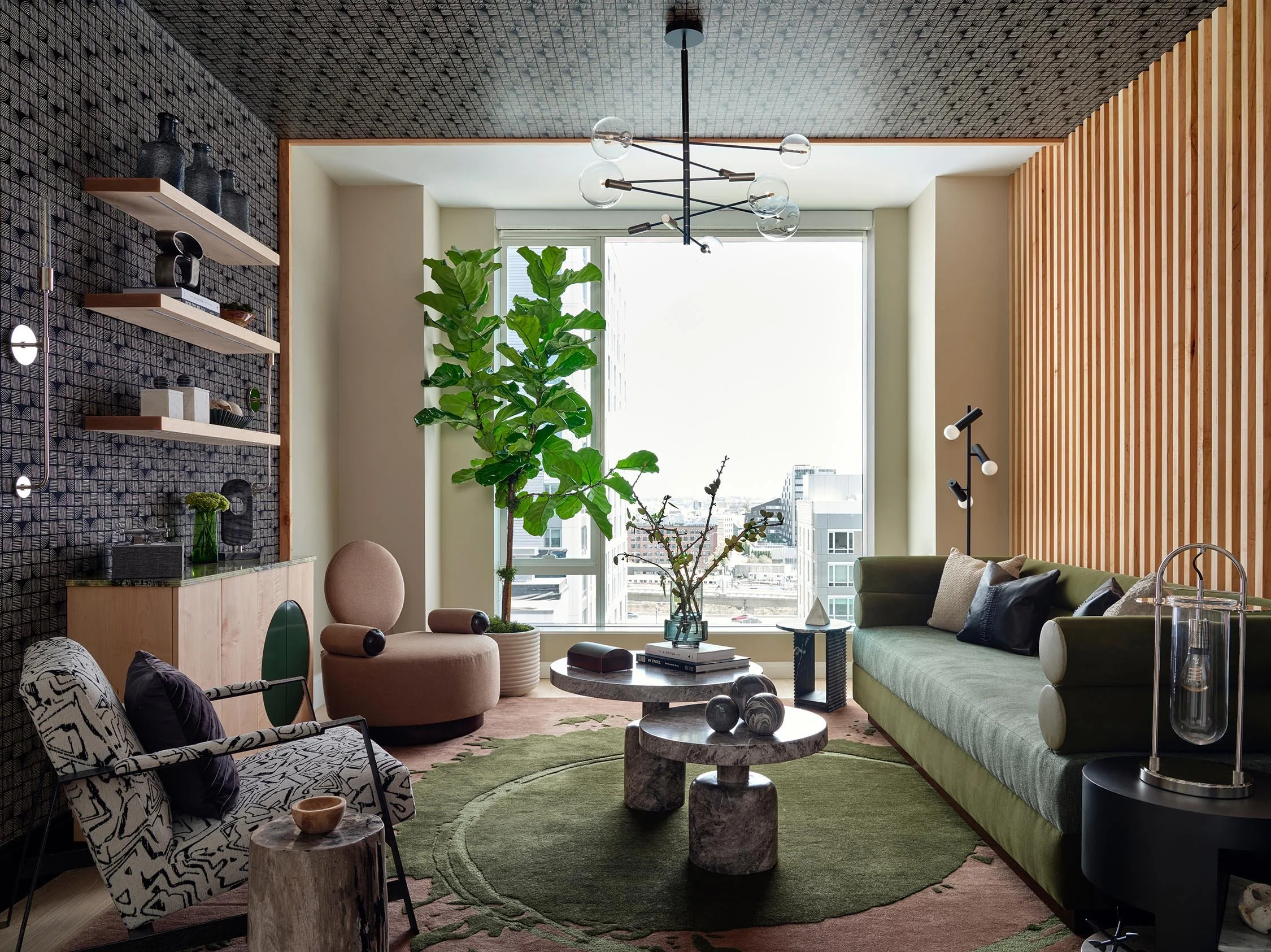
Project: Postmodern Naturals
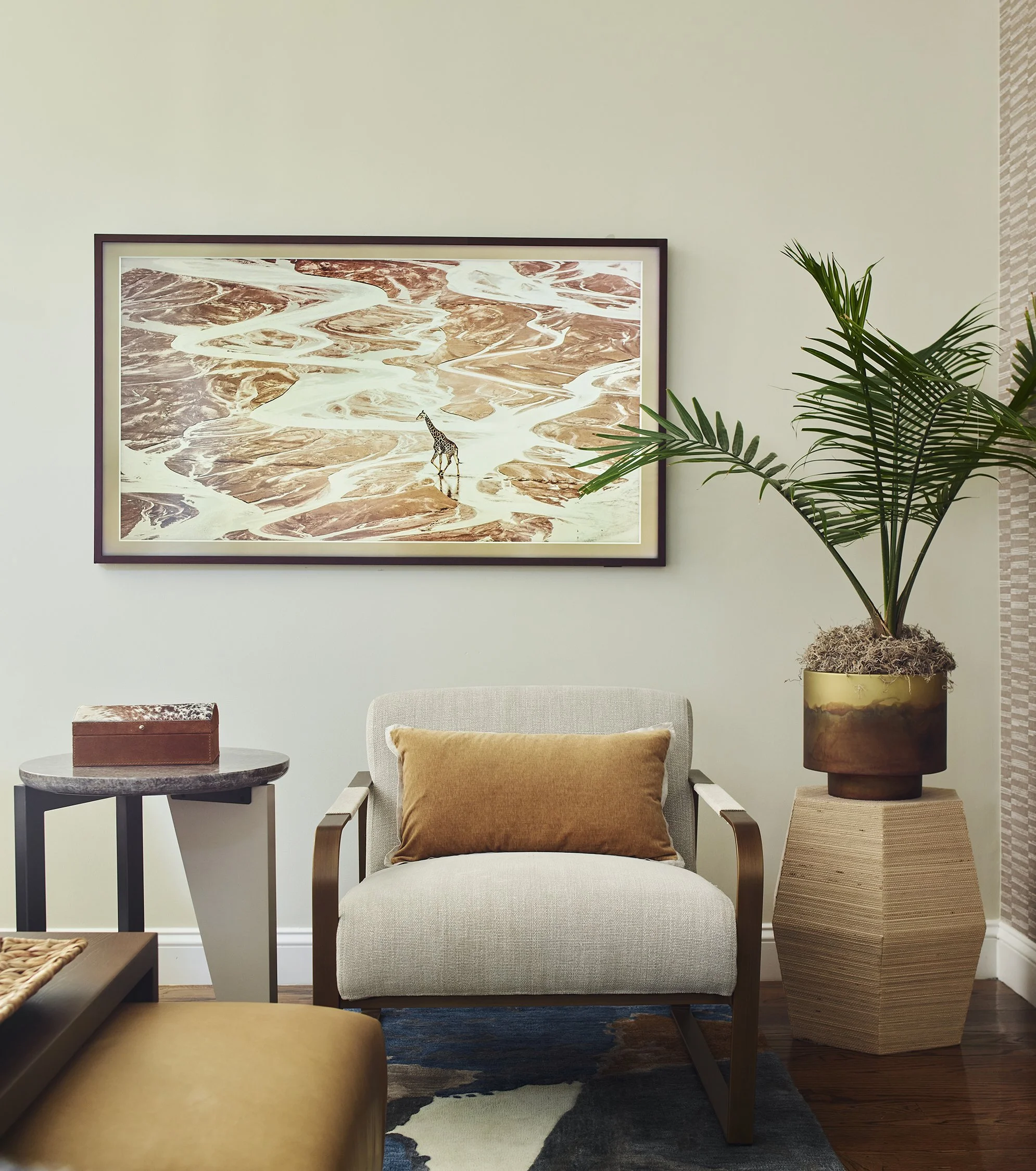
Project: International Influences
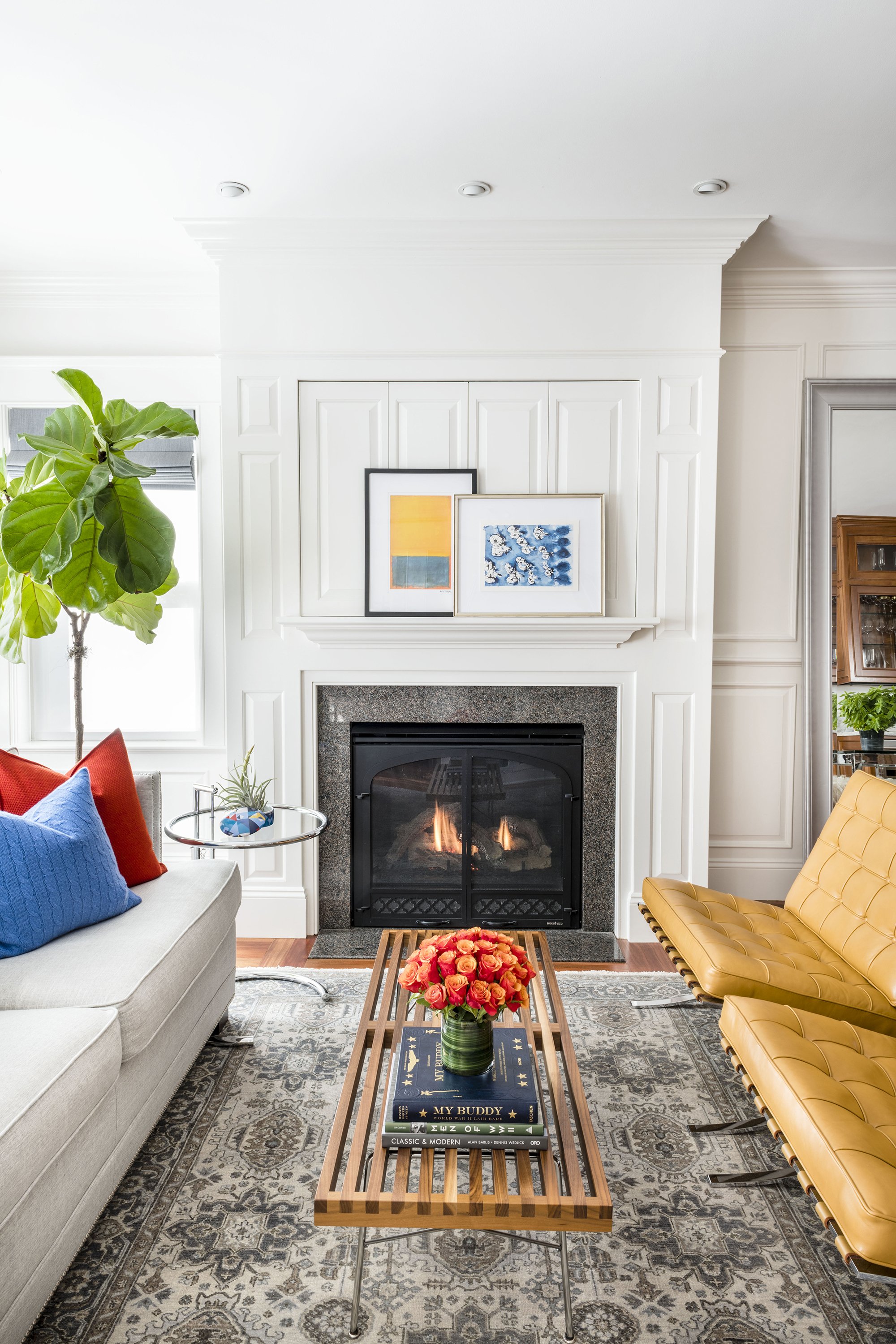
Project: Transitional Classic
Yay or nay to the TV
Including a television in the living room depends on how the space is used. For many households, it plays a daily role. For others, it may feel out of place in a room meant for conversation or quiet time.
We help clients think through how often the TV is used and how it fits into the overall experience of the space. Comfort and usability matter, but placement should support the room, not dictate it.
Of course, there is no universal answer. The value comes from making a choice that's based on real household habits.
Best practices for hiding or integrating a TV
When a TV is included, the right integration makes a noticeable difference. Placement should feel balanced within the room and not like an afterthought.
Options may include incorporating the TV into millwork, placing it within a gallery wall, or positioning it where it doesn’t draw immediate focus. Scale, height, and surrounding elements all influence how the TV is perceived.
When handled well, the TV becomes part of the room’s composition instead of its defining feature.
TVs can be hidden behind artwork that can slide to reveal the TV. It can raise up from a cabinet. It can be hidden behind a mirror that becomes translucent when the TV is turned on.
TV projectors are also an option.
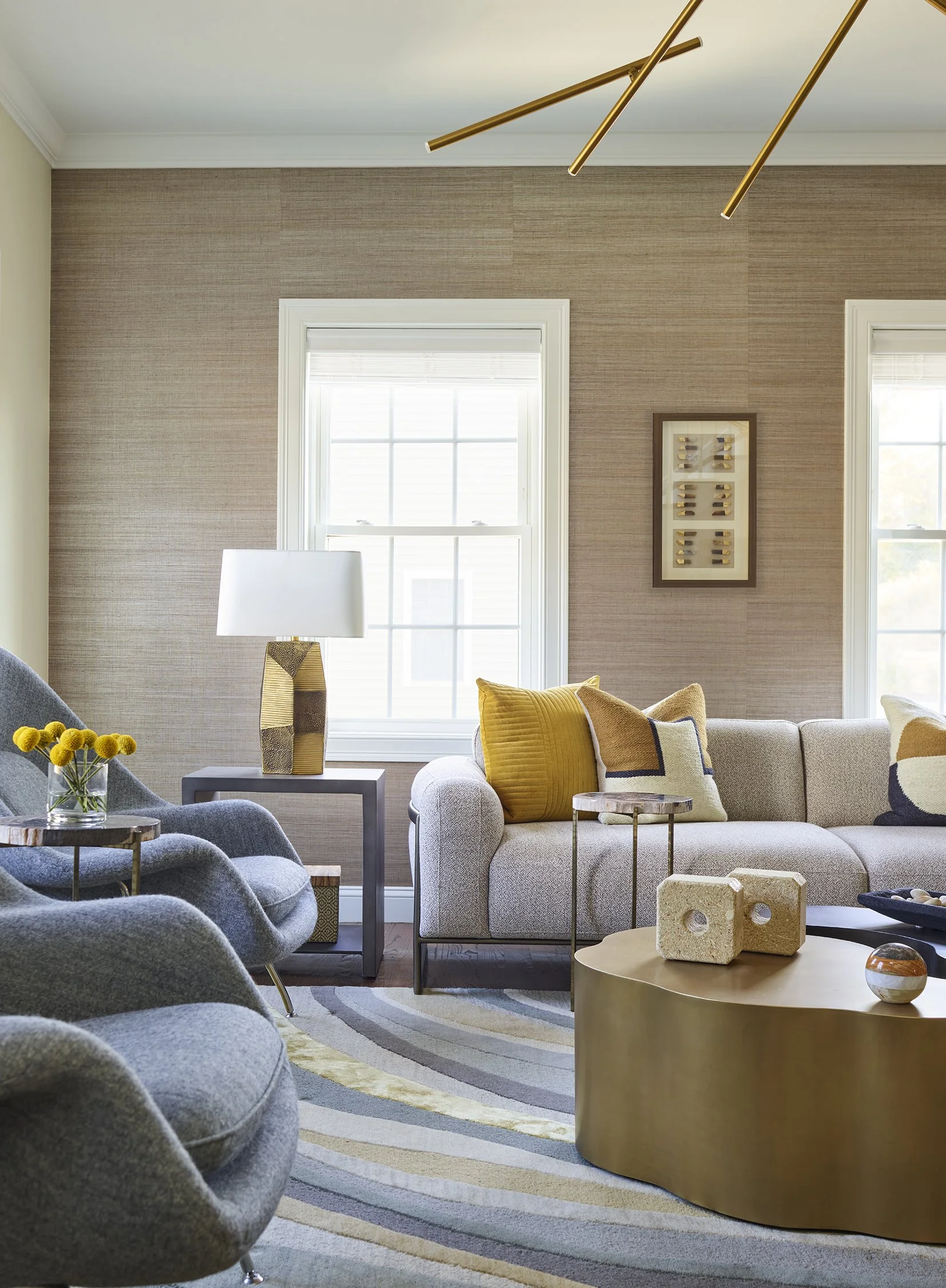
Project: International Influences
Open concept vs. contained living rooms
Open concept living rooms require careful planning to define areas without walls. Furniture placement, rugs, and lighting help establish boundaries. They also guide how the space is used.
Contained living rooms offer more intimacy but can still benefit from circulation as clear pathways and balanced furniture placement prevent the room from feeling closed off. We tailor our design approach to the structure of the home, allowing the living room to feel appropriate to its setting.
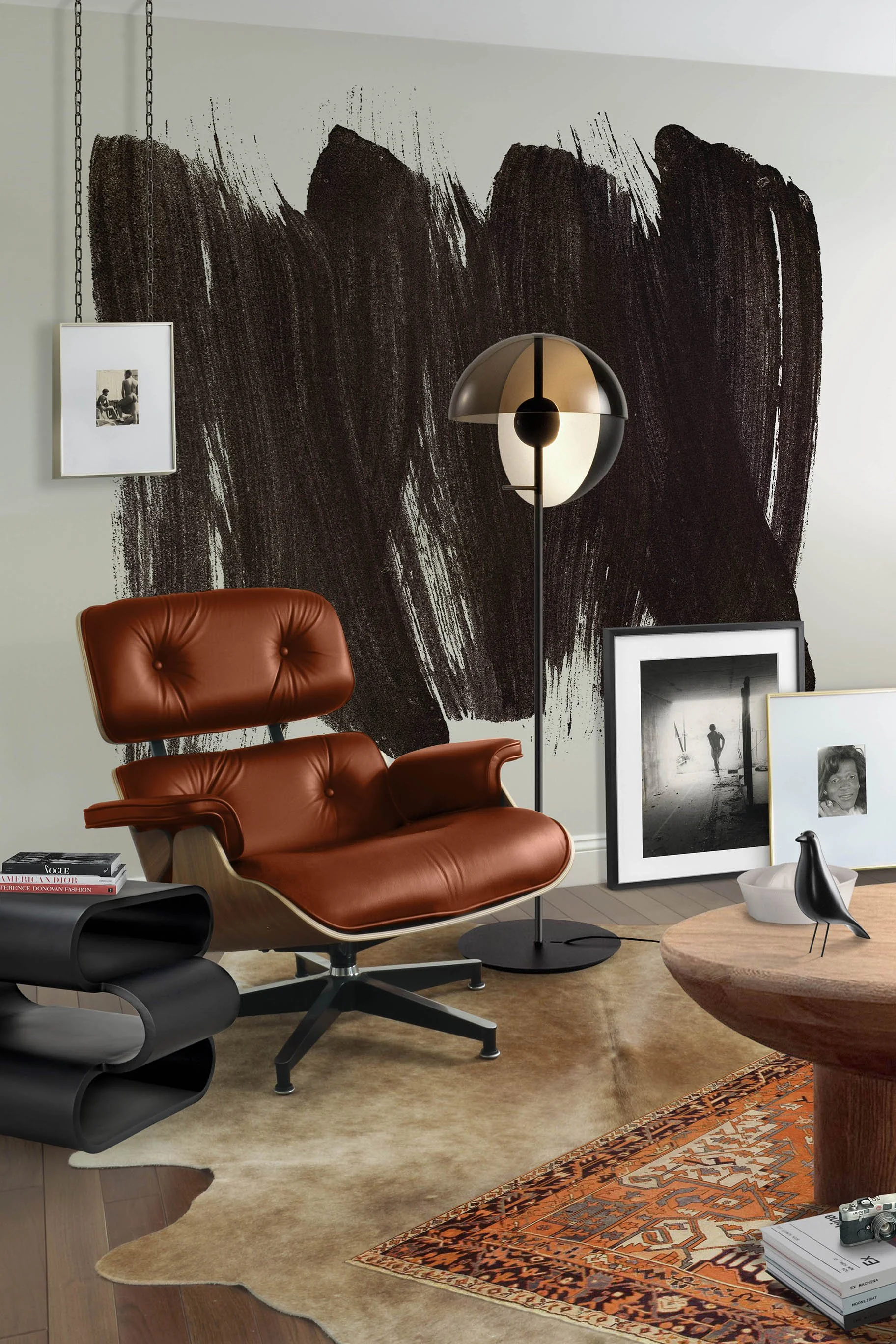
Project: Reading Nook Reimagination
Style thoughtfully: surround Yourself with things you love
Personal details give a living room warmth and meaning. Art, objects, window treatments, and textiles with personal significance help the space feel lived in and not staged.
We encourage clients to choose pieces that speak to them instead of filling space just to complete it. A mix of old and new can also add depth and keep the room feeling layered.
A living room should reflect the people who use it. When personal elements are added with care, the space feels comfortable, authentic, and easy to settle into.

Project: Seaside Sanctuary
Start the conversation
At Trevor Fulmer Design, we provide interior design services rooted in architecture, lifestyle, and long-term thinking. Our process focuses on thoughtful space planning, proportion, and restraint. We guide clients through furniture arrangement, material selection, and lighting with clear communication at every step.
Each living room design project begins with listening. We take time to understand how the room fits into the home, how it’s used during the week, and what matters most to the people living there. From that foundation, we create spaces that support daily life and feel comfortable over time.
For clients looking for a broader scope, our interior design service offers a clear process that supports projects of varying size and complexity.
Our approach to living room design
If you’re considering professional interior designer guidance for your living room, we’d love to connect. Our team works with clients throughout the Boston area and beyond, offering solutions shaped by experience.
To begin a project or learn more about our living room design services, complete our service inquiry form. We look forward to learning how you live and how your living room can better support it.