
Home Bar Design
Why every great home bar starts with design
A home bar should do more than store bottles and glassware. It should feel like it belongs in the house. The best bars give people a reason to gather, pour drinks, linger, and stay awhile.
A well-designed bar can also change how a home is used. When done right, it can be the spot guests drift toward before dinner, where conversations pick back up after dessert, or where you make yourself a drink at the end of the day. It’s a small space, but with a lot of social gravity.
We think a home bar deserves the same care as any major room in the house. When it is built into the architecture, materials, and movement of the home, it feels intentional from the start. It works hard, but it also brings a little mischief to everyday living.

Project: Nautical Noir
Creating a home bar that feels built in
The strongest home bars do not feel like furniture placed against a wall. They feel connected to the architecture around them.
That’s why our approach incorporates custom built-in furniture and architectural millwork. We design bars that can be recessed into walls or tucked into transitional spaces that naturally connect living and entertaining areas.
These choices help the bar become part of the home’s structure instead of a separate feature competing for attention.
The rooms nearby matter as well. Sightlines, materials, proportions, and traffic patterns all shape the experience. After all, a bar should feel like a continuation of the home, not an interruption.

Project: Neutral Nuances
The power of custom millwork
Entertaining habits are personal. One household may want a serious cocktail station, while another may need a landing place for serving pieces during dinner parties.
Custom cabinetry allows the bar to be designed around those habits. Wine collectors may need bottle storage. Cocktail lovers may want hidden compartments for tools, mixers, and accessories. A family that hosts large gatherings may need a flexible serving area that can handle a crowd.
Millwork also creates moments you cannot get from standard cabinetry. A unique door profile, integrated shelving, concealed storage, or unexpected material detail can give the space a distinct personality.

Project: Seaside Sanctuary
Materials that add depth and contrast
Materials carry much of the personality in a home bar. Stone countertops and full-height stone backsplashes can create a bold backdrop while standing up to real use. Walnut cabinetry brings warmth. Smoked glass adds a little mystery. Metal accents give the space definition.

Project: Seaside Sanctuary
Fluted details, textured wallcoverings, and wood paneling can add dimension without making the room feel busy.
The most memorable bars usually bring a few materials together in a way that feels collected, not crowded.
Stone, wood, metal, and glass each respond to light in their own way. That interaction gives the bar depth and makes the space feel different from morning to night.
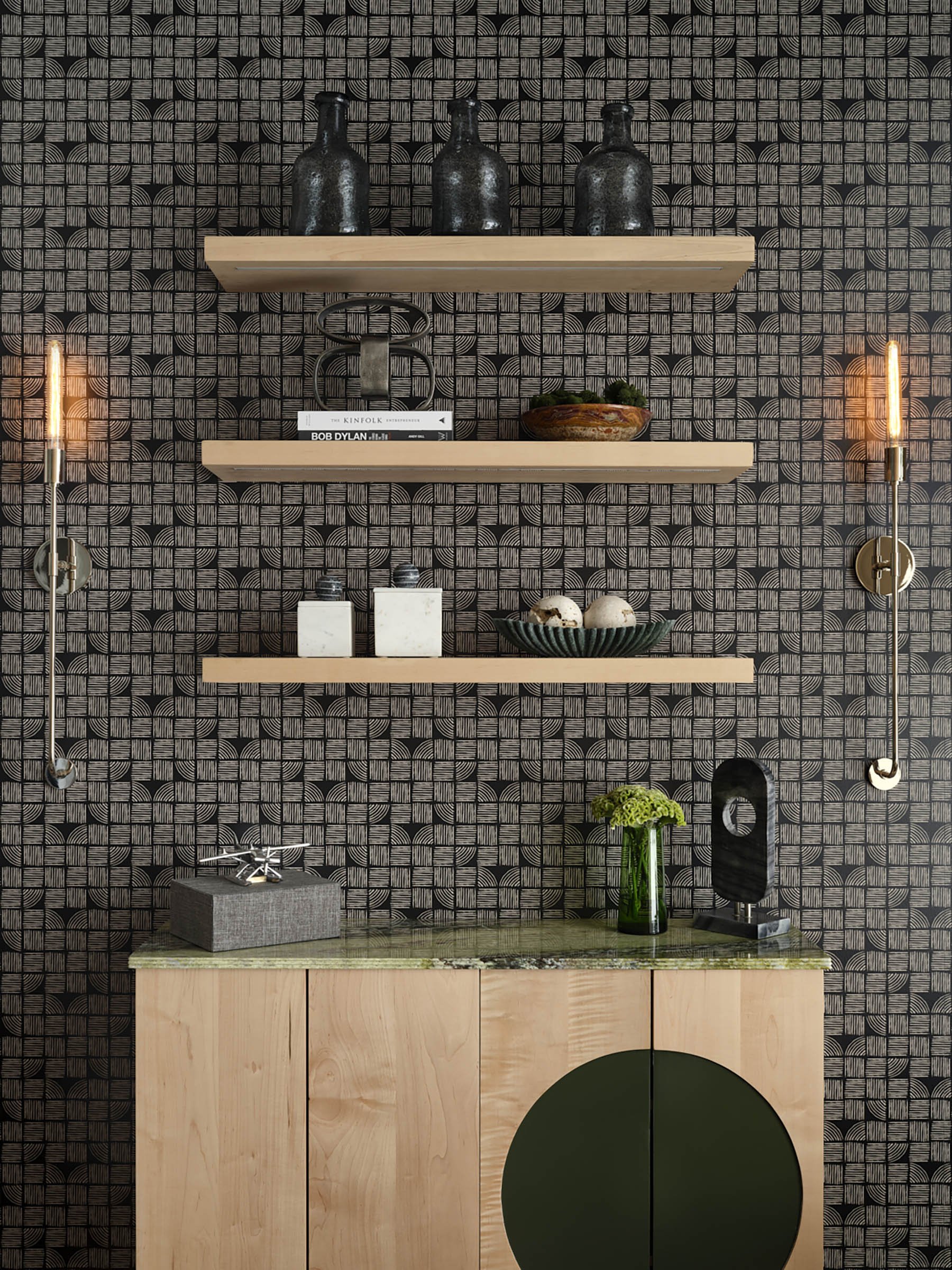
Project: Postmodern Naturals
Lighting that sets the mood
Layered lighting can turn a useful bar into the place everyone remembers.
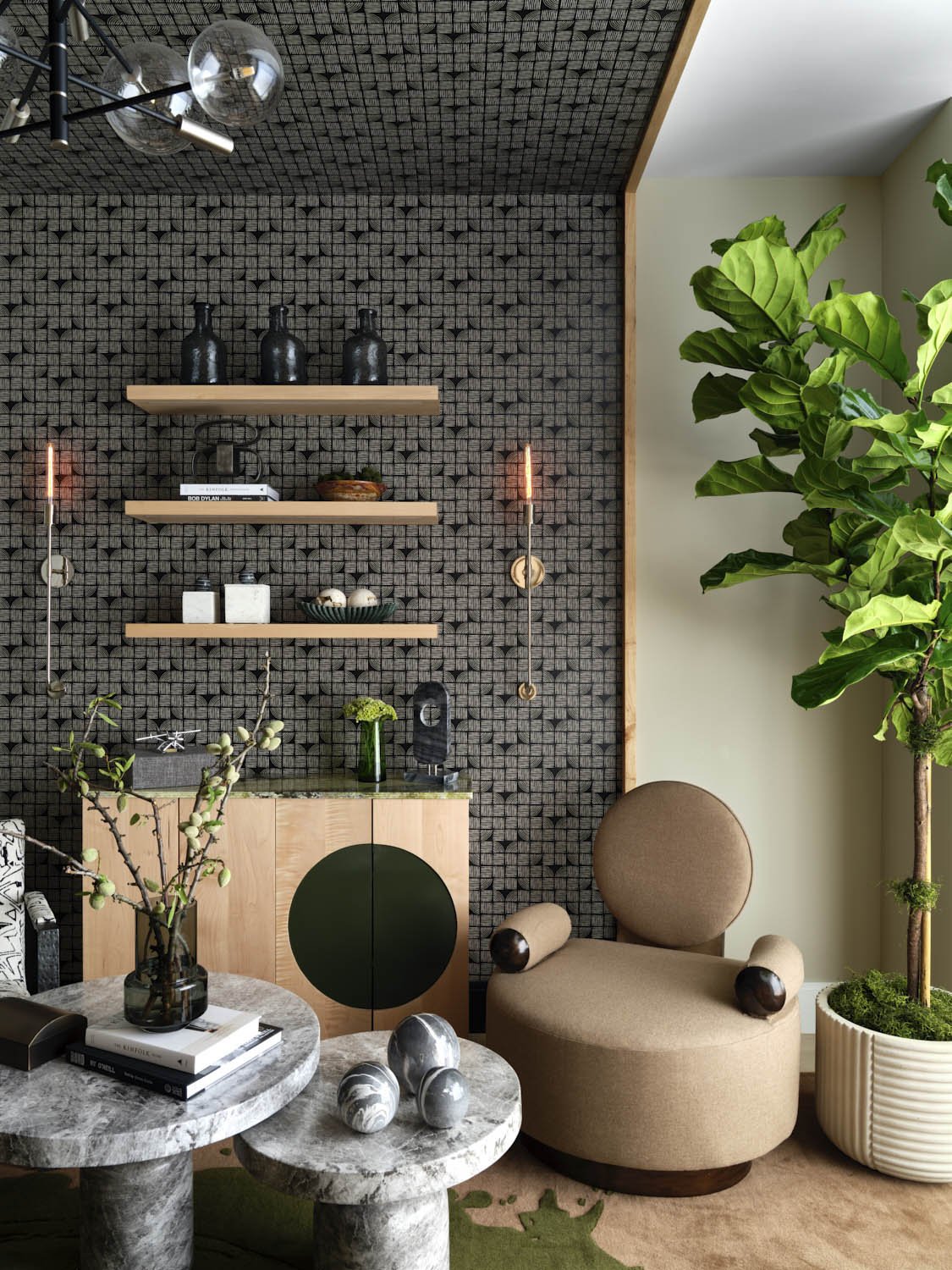
Project: Postmodern Naturals
Decorative fixtures can be utilized to add presence, while recessed lighting keeps the area practical. Integrated LED lighting can brighten shelves and decorative cabinets from within.
Backlit displays can highlight bottles, ceramics, or glassware. Picture lighting can pull attention toward framed artwork or architectural details.
A home bar should feel inviting without feeling overlit, since no one wants to sip a nightcap under interrogation lighting.

Project: Skyline Sophistication
Designing beautiful display opportunities
The objects displayed in a bar can be as interesting as the materials around them.
Open shelving creates room for glassware, spirits, ceramics, books, artwork, and collected pieces. There’s also floating shelves, which can be a lighter alternative to upper cabinetry, keeping the space open while still giving favorite objects a place to live.
The best displays feel personal. They might reveal a favorite trip, a family ritual, a great bottle, or a piece of art that always starts a conversation. A custom home bar should look like someone with taste actually uses it.
Making small home bars feel larger
Not every home has room for a dedicated entertaining suite. A compact bar can still have presence. Mirrored backsplashes reflect light and visually extend the space. Strategic lighting creates depth. Custom cabinetry helps every inch earn its keep.
For Boston condos and smaller homes, efficient layouts are essential. Integrated storage, floating shelves, and carefully selected materials can keep a compact bar from feeling crowded. Size matters far less than the decisions made within it.

Project: Nautical Noir
Storage solutions that work harder
Good storage keeps the bar looking composed without making every tool part of the display.

Project: Nautical Noir
Built-in wine storage, undercounter refrigeration, hidden charging stations, and dedicated compartments for cocktail tools all help the space stay clean and organized.
Concealed storage is valuable in smaller bars, where visual clutter can take over quickly. Everything should have a place, including the less glamorous pieces that make the bar function.
The result is a space that stays ready for the next pour.
Where home bars work best
Home bars can work in more places than most people expect.
Dining rooms make sense for entertaining. Finished basements and media rooms are natural gathering spots. Open-concept living areas can hold a bar without breaking up the space.
A bar can also help define a gathering zone without adding walls. It gives people a destination within the room and creates a clear purpose for an underused corner, alcove, or pass-through space. The best location is the one that supports how the home is lived in.
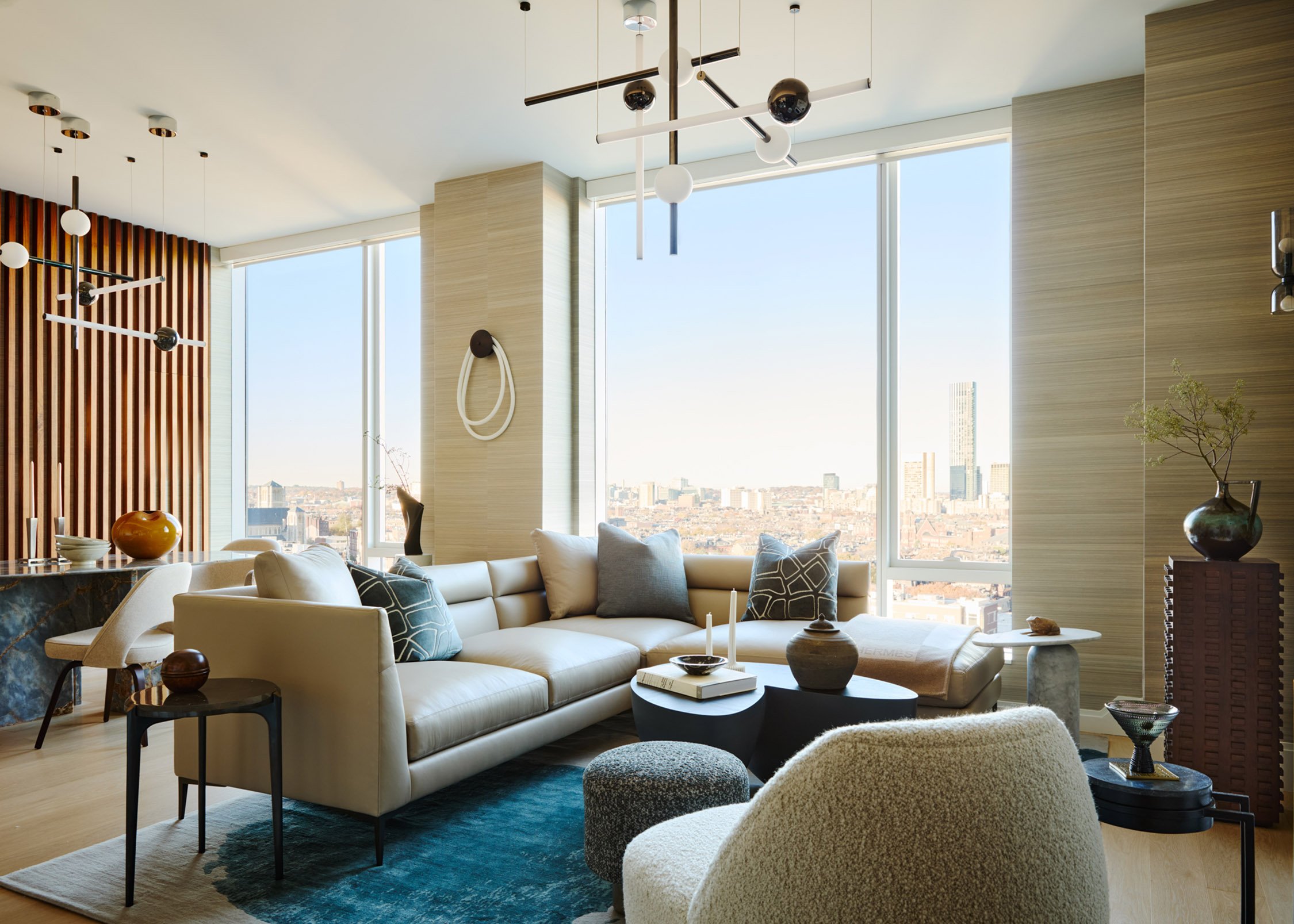
Project: Skyline Sophistication
Seating and circulation considerations
A beautiful bar still needs to feel good in use. Seating should invite conversation and support the way people naturally gather.
Stool height, counter depth, spacing, and nearby furniture all affect how comfortable the space feels.
Circulation is important too. Guests should be able to move around the bar without creating bottlenecks or cutting through another area of the room. When the proportions are right, the bar feels easy. People know where to stand, where to sit, and where to set down a glass.

Project: Nautical Noir
Home bar design trends worth considering
The best home bar trends are the ones with personality. Moody palettes can make a small space feel memorable. Walnut cabinets can bring warmth and depth. Metal finishes add contrast. Sculptural lighting gives the bar a point of view before the first drink is poured.

Project: Nautical Noir
Artwork is also becoming a bigger part of bar design. Instead of treating these spaces as storage zones, homeowners are using them as places to show pieces that feel expressive, funny, bold, or unexpected.
The strongest trends are the ones that feel true to the people living with them.
A place to push creative boundaries
Home bars belong in the same design category as powder rooms. They are small enough for risk and memorable enough to deserve it.
Unexpected materials, dramatic color, expressive artwork, and unconventional details can all work here. A bar gives the home a chance to loosen its tie a little.
Start your home bar design project
Every home bar begins with understanding how people gather, celebrate, host, unwind, and move through their space.
Through our full service interior design process, we guide clients through each phase of the project, from initial concepts and material selections to custom bar millwork, furnishings, and installation.
Our expertise in interior architecture services, lighting design, and spatial planning allows us to create home bars that feel fully integrated into the homes they inhabit.
As experienced home bar designers, we create custom home bars with character and purpose. If you are ready to create a space that feels built for the way you live, we would love to begin the conversation.