
Dining Room Interior Design
Why dining rooms matter
Dining rooms have a charming way of collecting the best parts of a home. They hold everything from birthday candles and holiday chaos to beautiful tableware and conversations that never seem to end on schedule.
That is exactly why dining room design deserves more attention than a table and a dozen chairs lined up for duty. A dining room shapes how people gather. It can make Tuesday dinner feel less transactional and make a special occasion feel worthy of the silver you forgot you owned.
At Trevor Fulmer Design, we see the dining room as a room with manners, but not too many. It should feel layered, architectural, personal, and ready for use. No one needs a room that looks perfect but feels untouchable. The best dining rooms invite people in, then give them plenty of reasons to stay.

Project: Skyline Sophistication
Creating a layered dining room
A layered dining room starts before the furniture arrives. The walls, ceiling, trim, windows, flooring, and sightlines all contribute to the room’s point of view.
A strong dining room has more going on than a matching set placed under a chandelier. It may include sculptural lighting, tactile wallcovering, vintage chairs, plaster walls, a lacquered ceiling, or a sideboard with enough character to start a conversation before the guests do.
Layering does not mean filling every surface. It means choosing materials, shapes, and finishes that create depth without clutter. Wood can bring warmth, while stone can add weight. Metal can sharpen the room, and upholstery can soften the harder edges.
When done well, the mix feels collected, not chaotic. This is where an experienced interior designer can help shape a room that feels intentional without becoming predictable.

Project: Nautical Noir
Lighting as a focal point
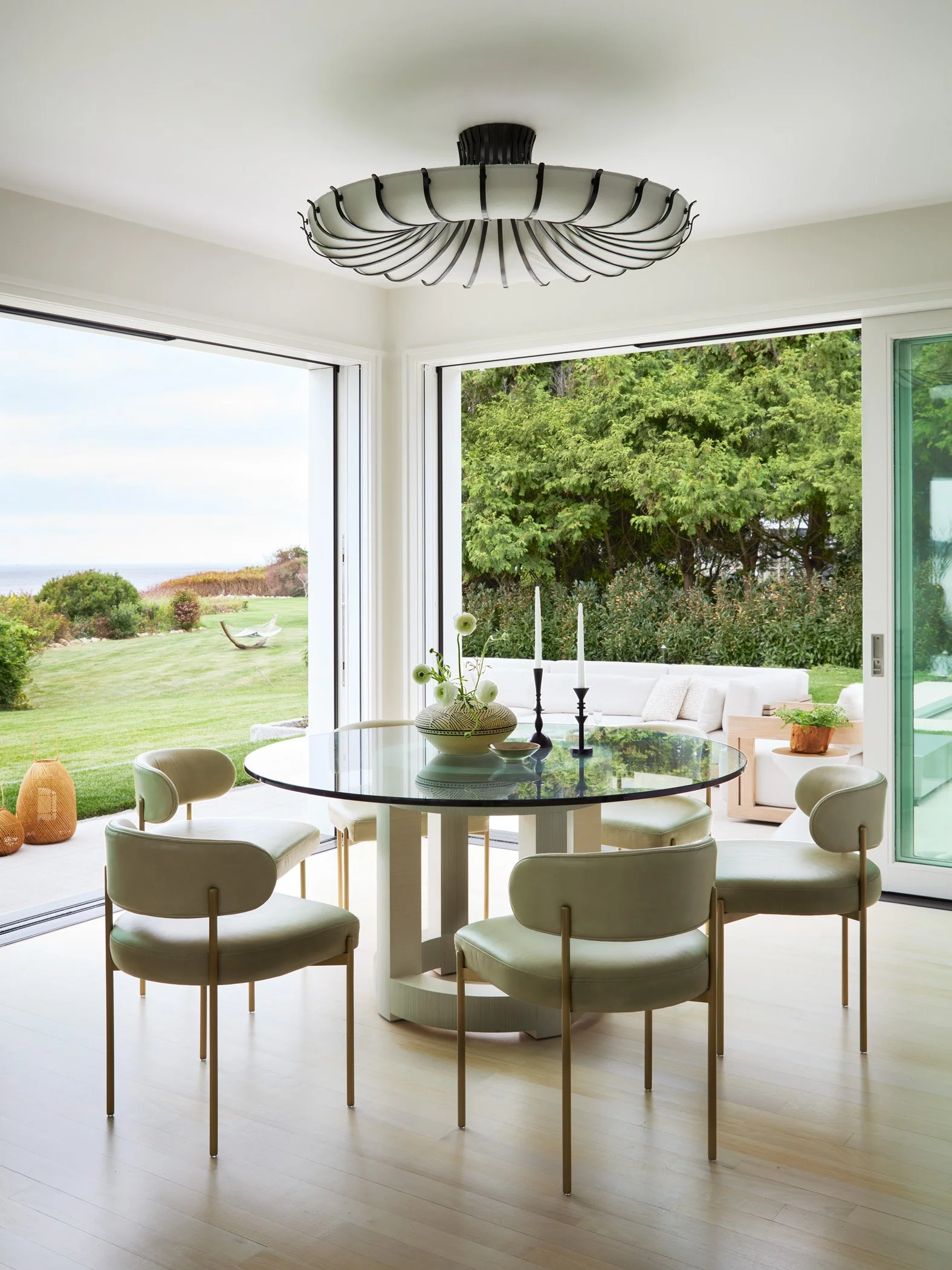
Dining room lighting gets to have a little drama. It hangs in the center of the room, above the table, at the exact place everyone is already looking. It should earn that attention.
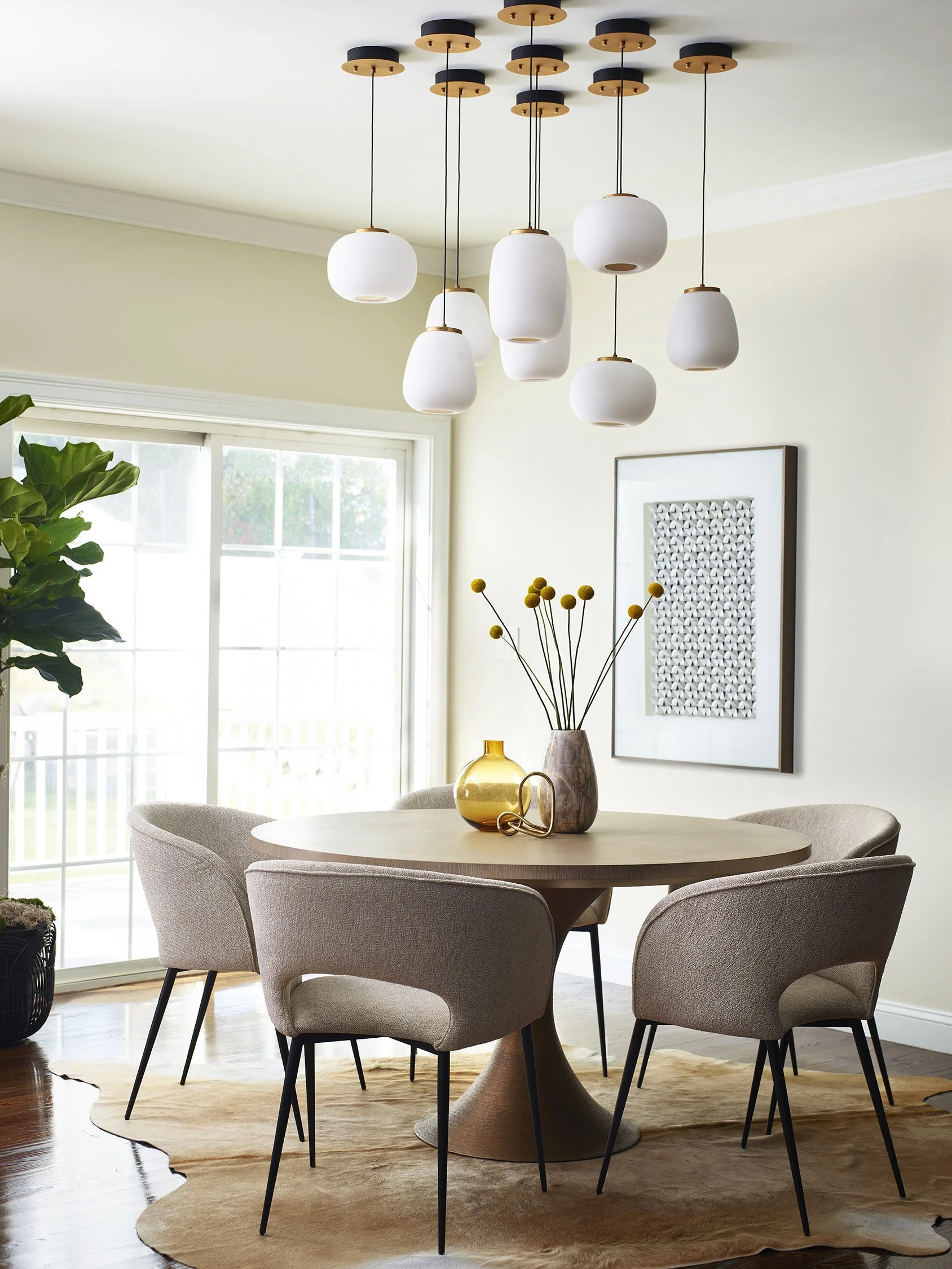
An oversized pendant or chandelier can act like sculpture, giving the room presence before a single place setting appears. The right fixture changes the scale of the room and adds a note of surprise.
Still, one showpiece should not carry the entire lighting plan. As mentioned, dining rooms need layers, and that includes the lighting.
There are many ways to achieve a layered lighting look. Ambient lighting can help the room function while sconces add warmth. Picture lights can highlight artwork, and decorative fixtures convey some personality.
Lighting should also shift with the occasion. A sunny brunch, a holiday dinner, and a late evening glass of wine all ask for something slightly different. A well-planned dining room with the right lighting can handle the full social calendar.
Project: Seaside Sanctuary
Architectural features that add dimension
Architectural details give dining rooms staying power. They make the room feel considered even before anyone notices the furniture.
Wood paneling, large format sliding doors, plaster walls, custom millwork, and wallcoverings can add depth and character. In older homes, these elements may already exist and simply need a thoughtful hand. In newer homes, they can create the sense of history and texture that blank walls often lack.

Project: Seaside Sanctuary
Ceilings also deserve attention. Coffered ceilings bring structure. Wallpapered ceilings add wit. Lacquer finishes catch the light and create a bit of theater, which is never a bad thing in a room built for hosting.
For larger renovations, our interior architecture services allow us to look at the dining room as part of the full home, not as a decorative island floating on its own.
Project: International Influence
Choosing the right dining table and seating
The dining table anchors the room, so scale matters. Too large, and everyone has to perform a sideways shuffle to reach their seat. Too small, and the room feels underdressed.
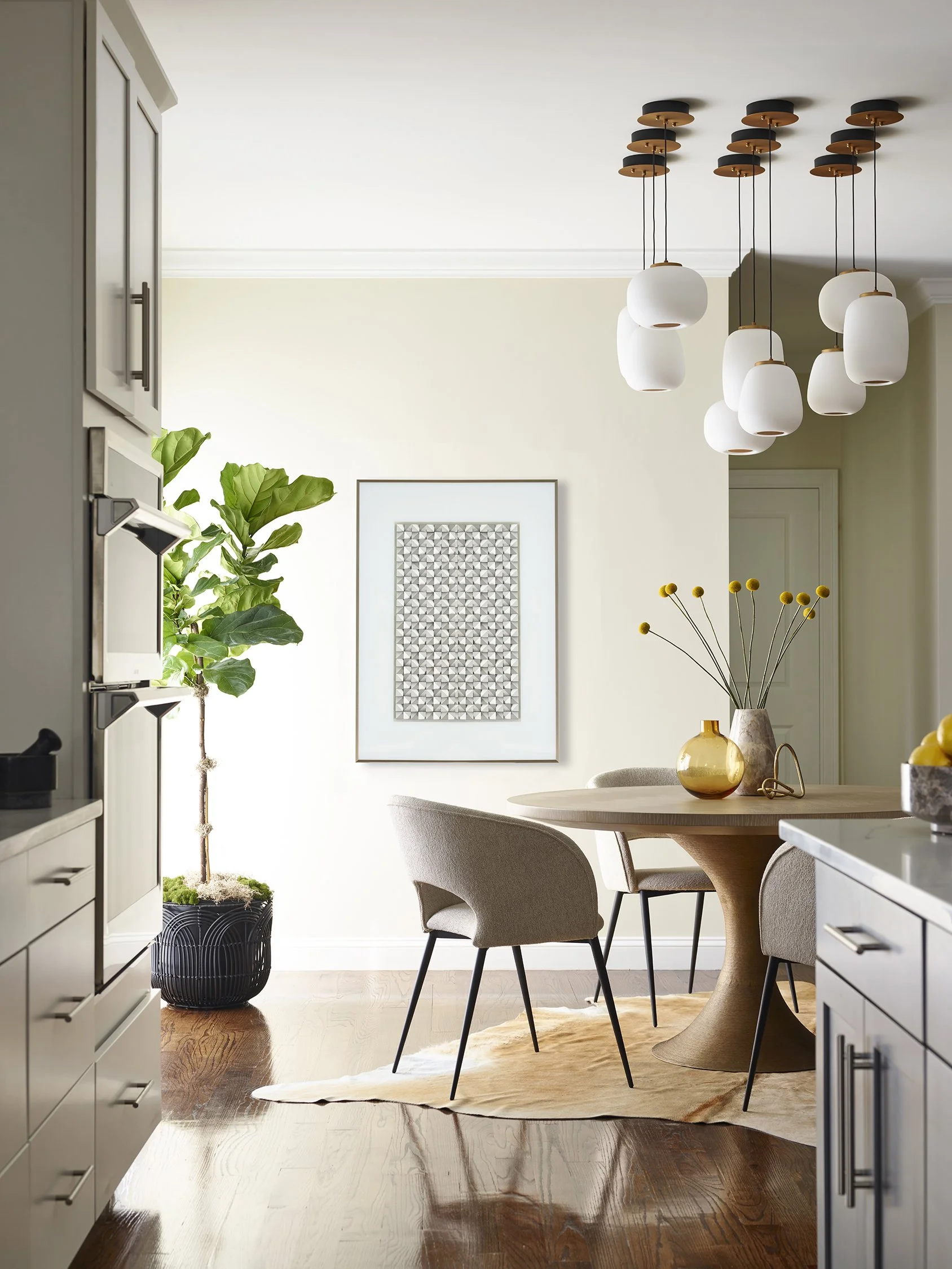
Round tables often work well in smaller dining rooms because they improve circulation and make conversation feel more natural. Rectangular and oval tables can suit larger rooms, particularly when the space needs a stronger central gesture.
Project: International Influence
Seating should look good, of course, but comfort must be considered too. Dining rooms are made for lingering. A chair that looks fabulous for five minutes and becomes a punishment by dessert has missed the assignment.
Mixing seating can also make the room feel less rehearsed. Upholstered host chairs, vintage side chairs, or a bench along one wall can create a more interesting composition than a single matching set.
Project: Contemporary Kitchen
The role of rugs in dining room design
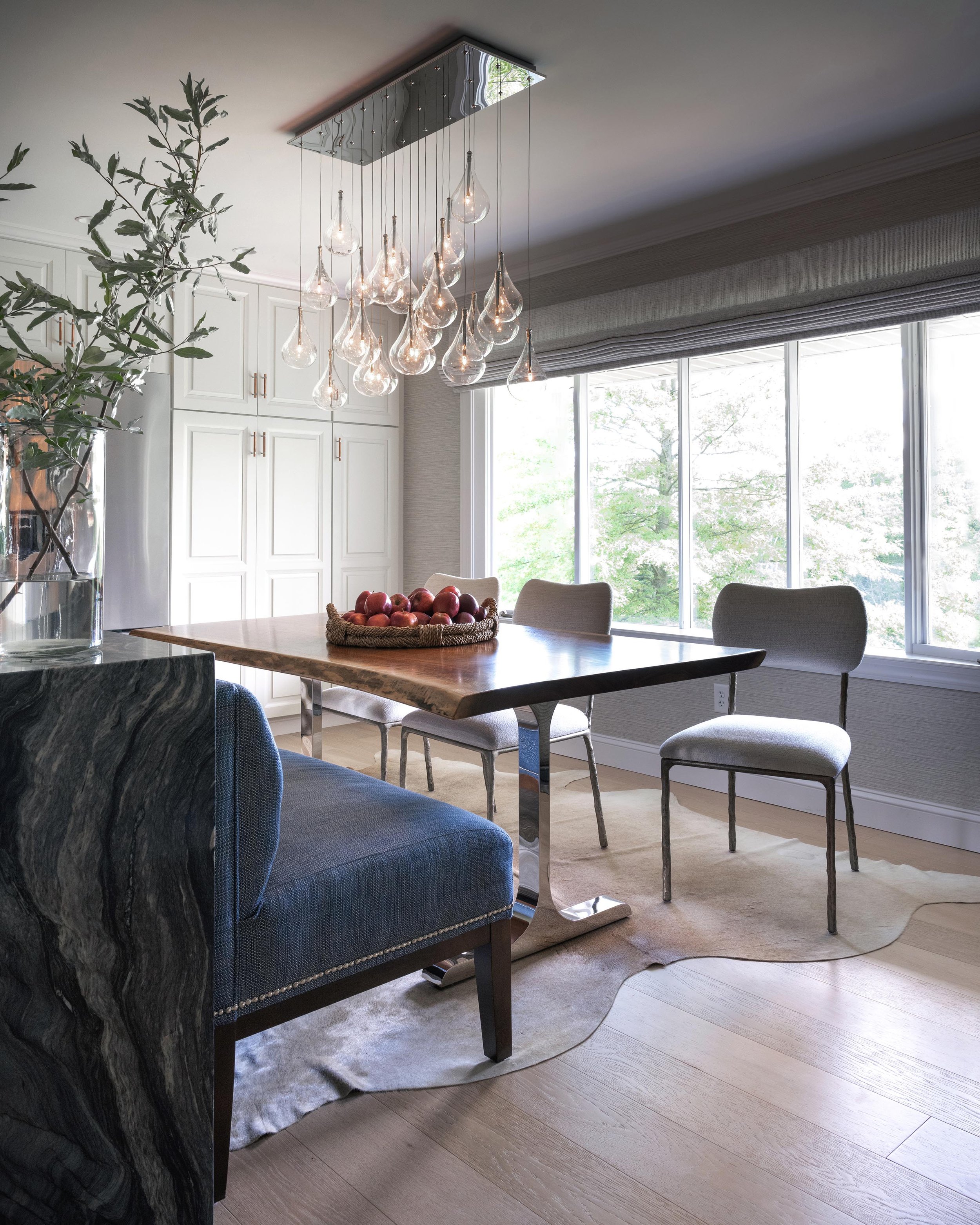
A rug can ground a dining room, define the zone, and soften the sound of a lively dinner. In open concept homes, it also helps establish where the dining area begins without calling in a wall.
Size is the detail that matters most. Dining chairs should stay on the rug when pulled out from the table. If chair legs catch the edge every time someone stands, the rug is too small. It may be lovely, but it is also misbehaving.
Project: Contemporary Kitchen
Pattern and texture can also help hide the realities of dining. Spills and crumbs happen, and a dining room should be designed with that in mind.
Ultimately, the right rug makes the space feel more finished while adding comfort underfoot. The Foundations and Natural Principles rug collections bring story-driven design, texture, warmth, natural materials, and timeless craftsmanship to the dining room.
Project: Soothing Shades
Mixing materials for visual interest
Dining rooms benefit from a good mix. Too much of one finish can make a room feel flat, even when the individual pieces are beautiful.
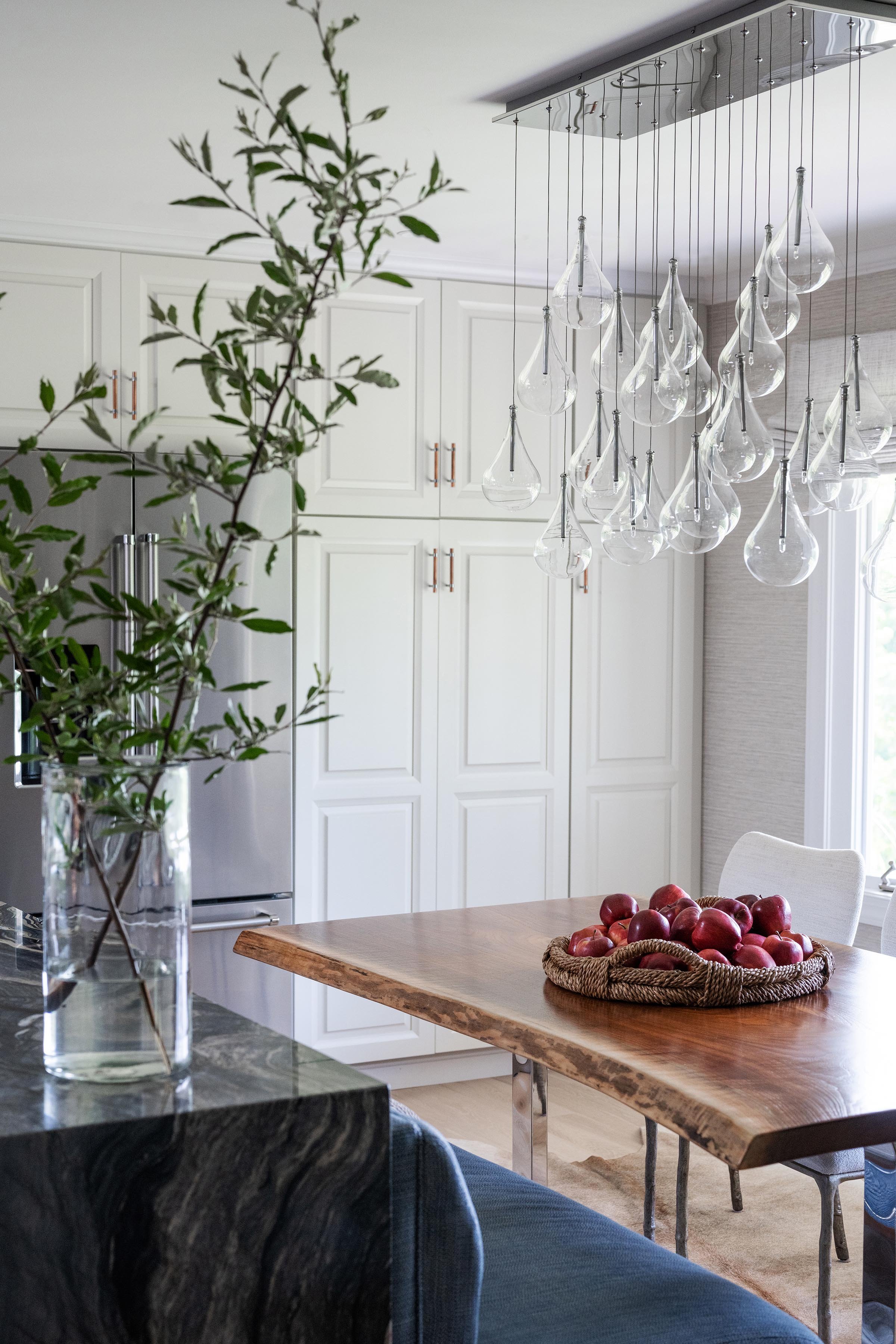
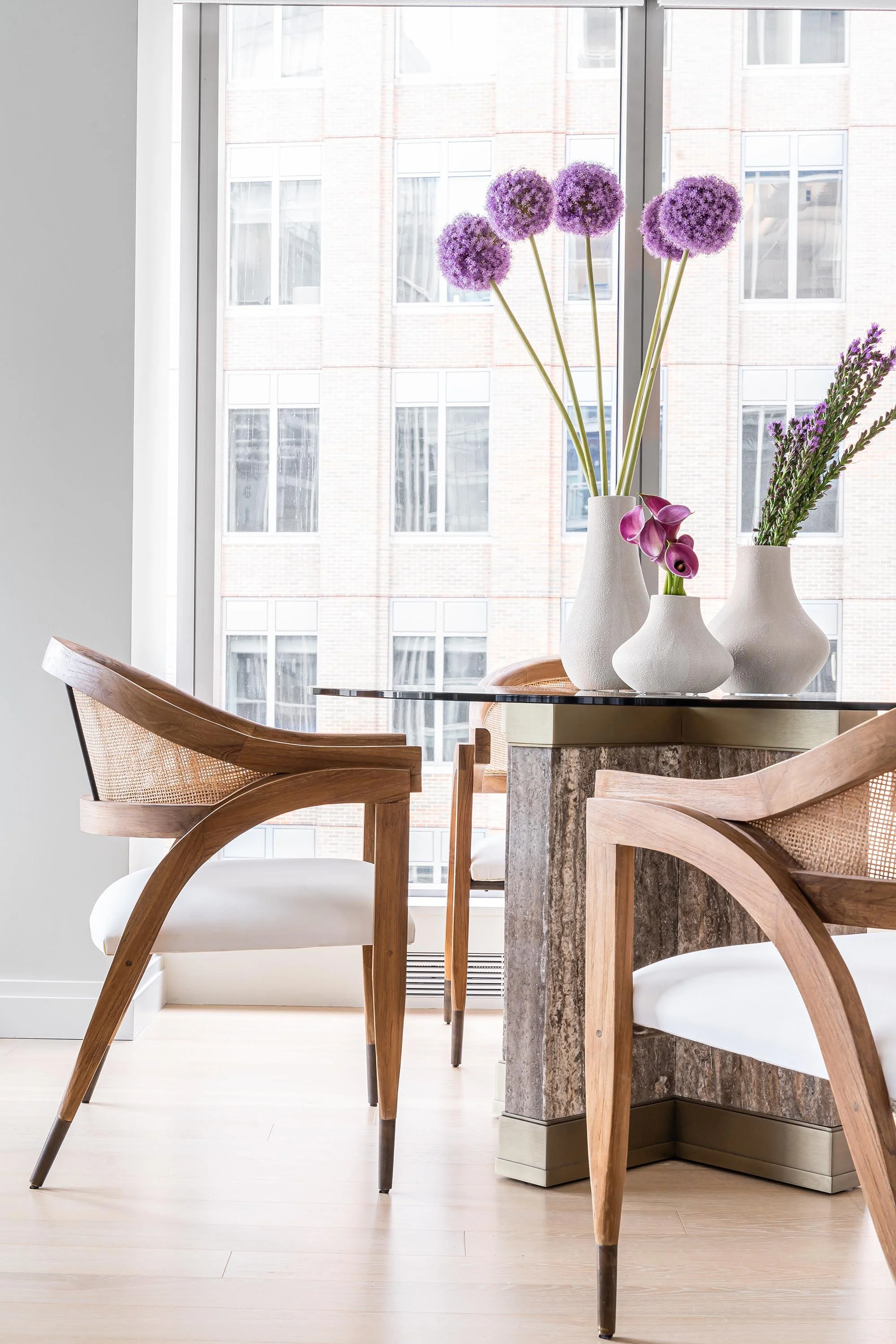
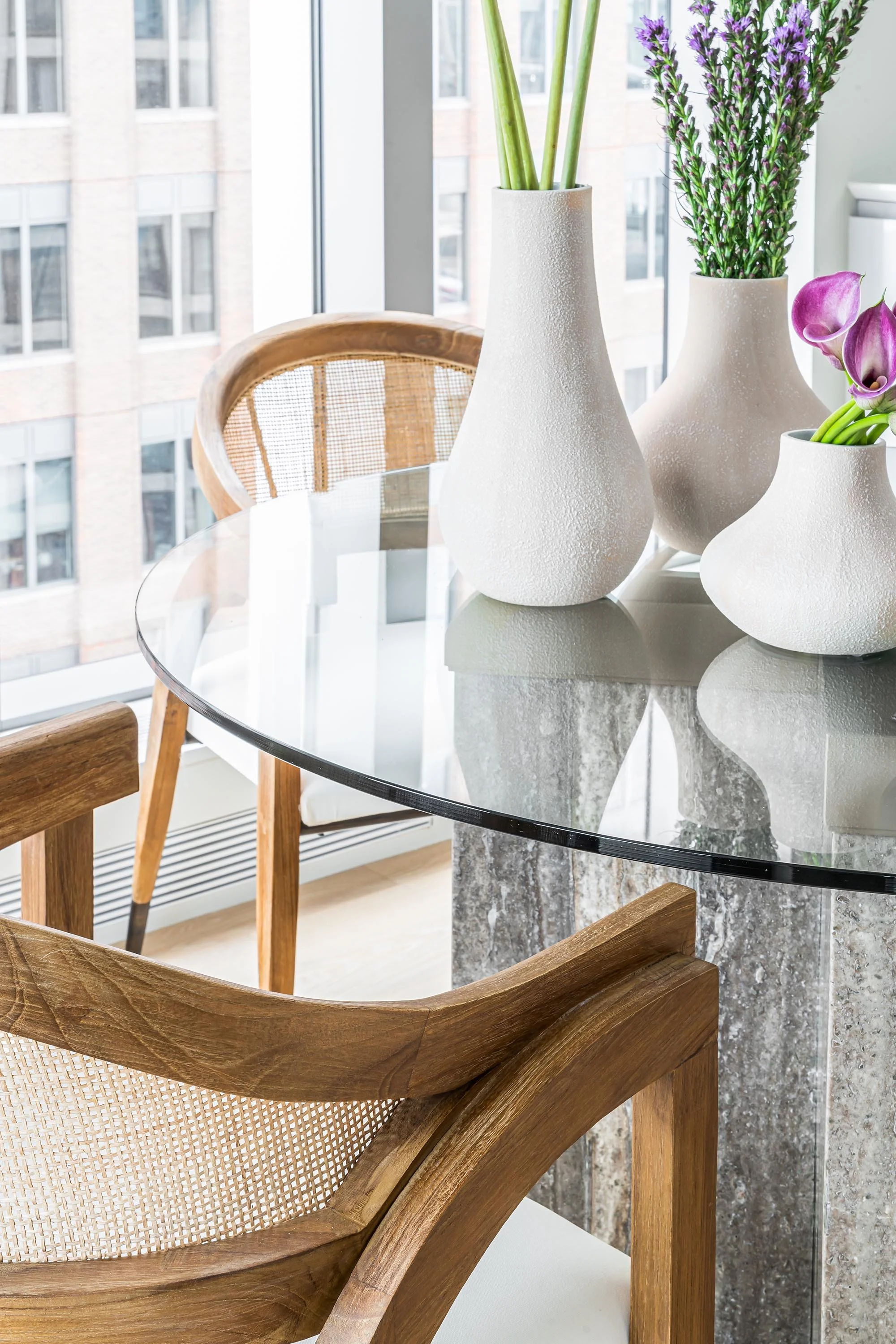
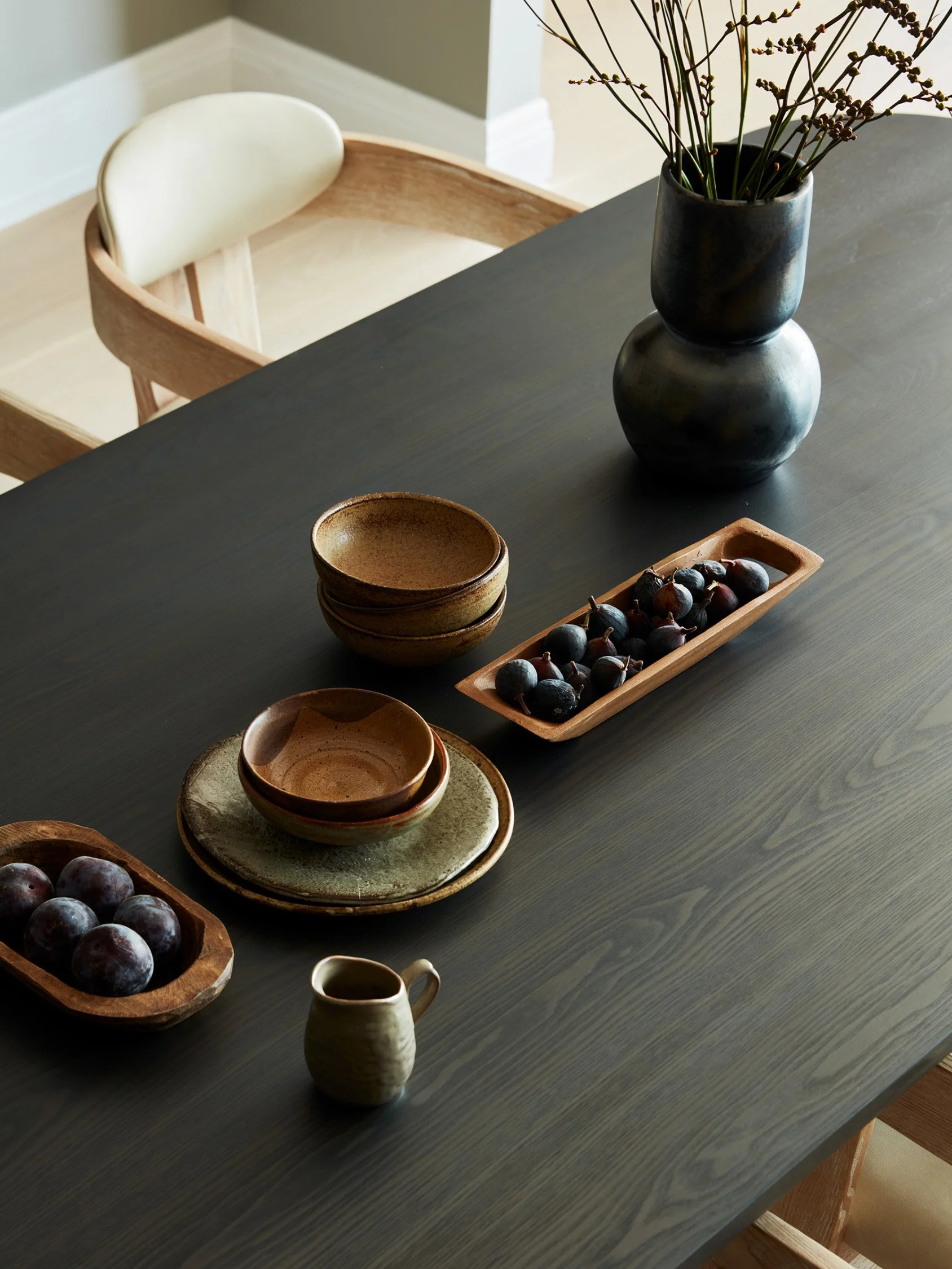
Wood, stone, metal, glass, and upholstery each bring a different quality. The contrast between them gives the room energy. A dark wood table with lighter upholstered chairs, a metal light fixture above a stone-topped sideboard, or a glass cabinet beside textured wallcovering can keep the space from feeling one-note.
Project: Soothing Shades
The trick is restraint. A room does not need every material available to hum. It needs the right mix in the right amounts.
Matching furniture collections can feel safe, but they often leave little room for charm. A dining room should have a point of view, not a receipt from one showroom.

Project: Nautical Noir
Custom furniture and built ins
Custom pieces can solve problems that standard furniture cannot. They also give a dining room a sense of permanence.
A custom dining table can be built to the exact scale of the room. Banquettes can bring generous seating to tight Boston condos, breakfast rooms, and coastal New England homes where every inch has a job. Built in cabinetry can store linens, serving pieces, glassware, and less glamorous necessities that still deserve a good hiding place.

Project: Nautical Noir
Our work with custom furniture allows us to create dining rooms that feel tailored to the architecture of the home. The result feels less like furniture was added and more like the room grew into itself.
Project: Nautical Noir
Art and accessories that add personality
Art gives a dining room its spark. A large painting can balance architectural lines. A vintage mirror can bring age and reflection. A sculptural object on a sideboard can create just enough intrigue.
The goal is not to style the room into submission. Accessories should feel collected, not staged. A dining room becomes more memorable when it includes pieces with history, humor, or a little tension.

Project: Nautical Noir
We like a mix of contemporary and vintage because it keeps a room from landing too neatly in one category. New pieces bring freshness and older pieces bring soul. Together, they make the dining room feel lived in, even before the first dinner party.
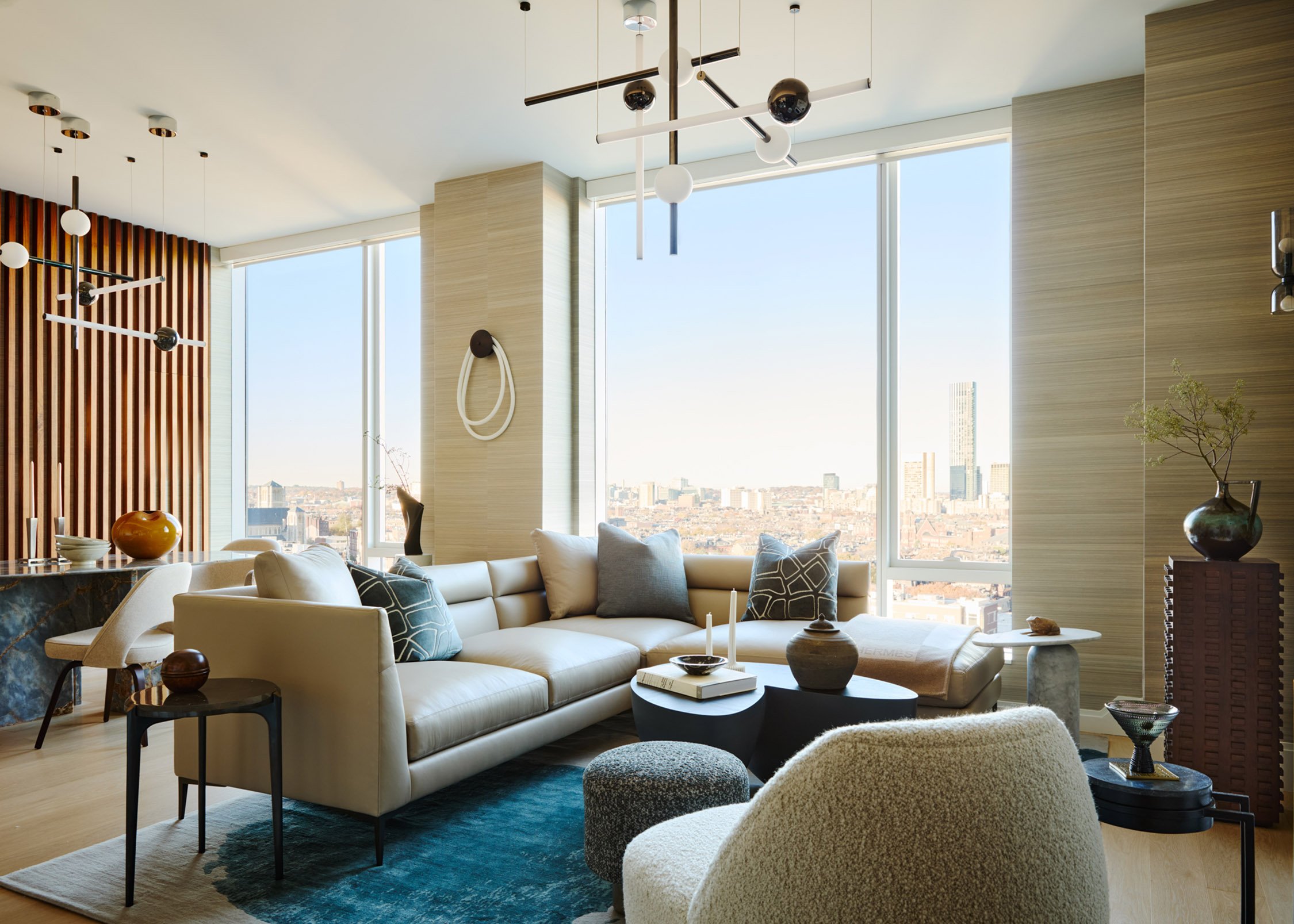
Project: Skyline Sophistication
Dining rooms in open concept homes
Open concept homes ask dining rooms to define themselves without walls. That is where lighting, rugs, and furniture placement become essential.
A chandelier can mark the dining area from above. A rug can define it from below. The table and chairs establish the center. Nearby living and kitchen areas should relate to the dining room, but they do not need to match it.
This balance can be especially important in homes where the dining area sits between the kitchen and living room. The space should feel connected but still have its own identity.
Good dining room design services account for those transitions, making the room feel distinct without interrupting the larger flow of the home.
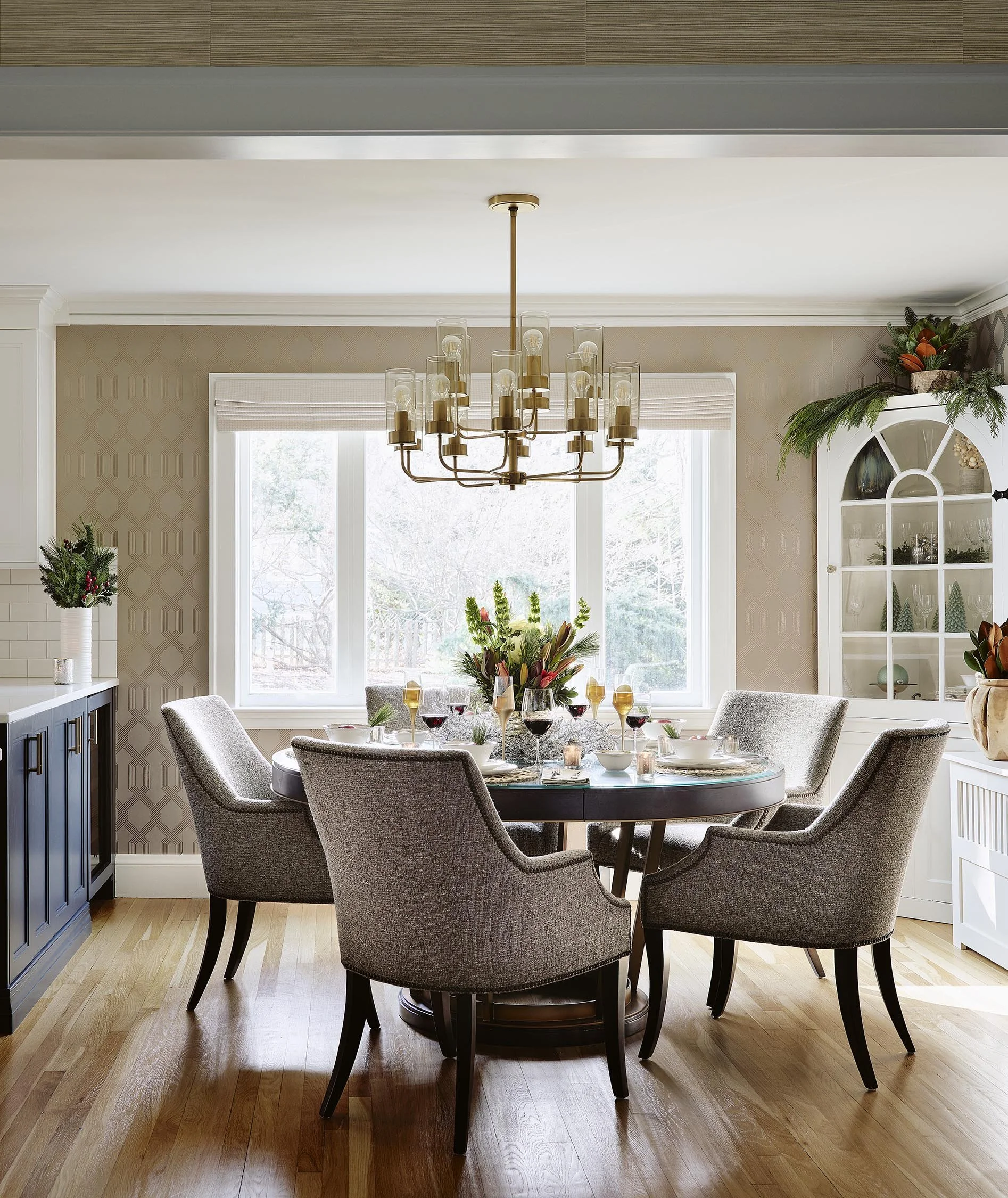
Project: Cheerful Christmas
Dining room design in New England homes
New England homes rarely come without opinions. Historic moldings, old fireplaces, uneven floors, compact rooms, and coastal views all have something to say. That is part of the pleasure.
In Boston brownstones, colonial homes, and waterfront properties, dining room design often involves working with the home’s existing character while introducing modern pieces that keep the space feeling current. Original details can sit beautifully beside contemporary lighting, bold artwork, and custom furnishings.

Project: Cheerful Christmas
The best approach respects what is already there without treating the home like a museum. A dining room should honor the architecture but still make room for the people living there now.
Start your dining room design project
At Trevor Fulmer Design, our dining room projects begin with how clients live, gather, entertain, and move through their homes. From there, we consider architecture, lighting, furniture, art, and every detail that shapes the room’s experience.
Through our full service interior design process, we guide clients from concept through installation, creating spaces that feel layered, personal, and ready for real life.
If you are furnishing a new home or rethinking a dining space that has never quite found its footing, we would welcome the conversation. Your next dinner party deserves a room with something to say.